
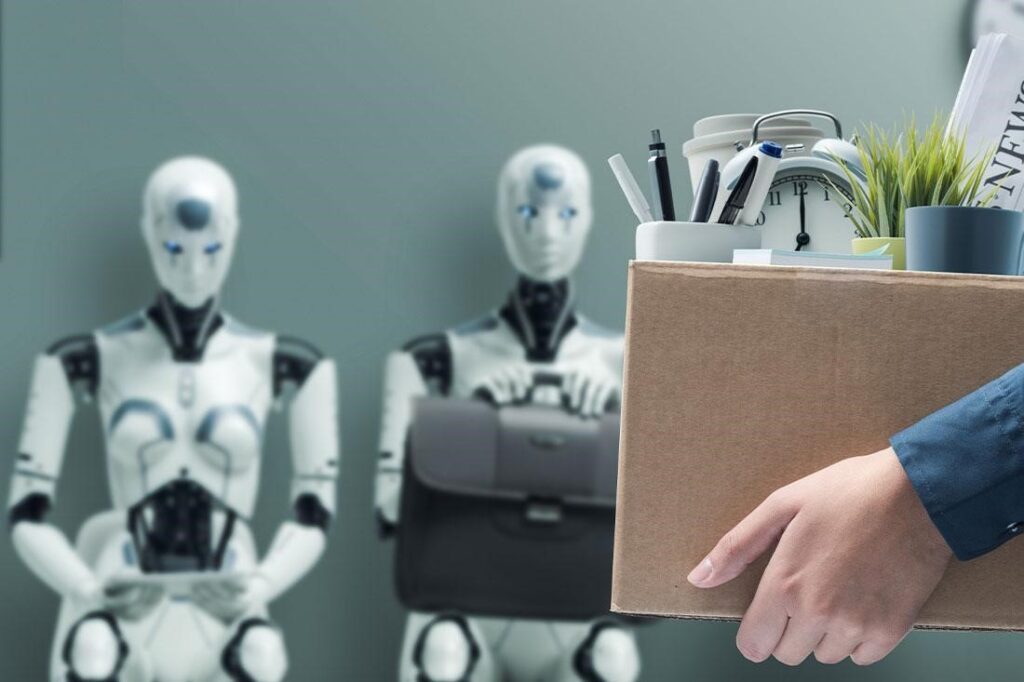
Everyone is still arguing about whether AI will replace programmers, lawyers, or high paying tech roles.
That debate sounds smart, but it is missing what is actually happening.
Because the AI job impact US 2026 is already reshaping the workforce in ways most people are not noticing.
It is not happening at the top.
It is happening at the bottom.
If you are trying to get your first job right now, you are walking into a market that is already shrinking.
The roles people depended on to get started are not disappearing loudly.
They are not being cut in dramatic layoffs or trending headlines.
They are just slowly fading out.
Fewer job listings. Fewer openings. More competition for what is left.
No one announces it. But everyone entering the workforce feels it.
What the AI Job Impact US 2026 Looks Like Right Now

This is not a future problem.
This is already happening across industries in the U.S.
Customer Support Is Being Replaced First

Customer support used to be one of the biggest entry points into the workforce.
Now it is one of the fastest shrinking.
AI systems handle:
- Customer queries
- Refund processing
- Order tracking
- Basic troubleshooting
According to Gartner, up to 80 percent of routine customer interactions are expected to be handled by AI in the next few years. You can explore the shift here: Gartner customer service AI trends
This is a clear example of how the AI job impact US 2026 is already reducing the need for large support teams.
Junior Analysts Are Being Cut Out of the System

This is where things get more serious.
Entry level analyst roles used to be the gateway into careers like finance, marketing, and consulting.
You started small:
- Cleaning data
- Building reports
- Supporting senior teams
That work is now automated.
AI tools can process data, generate insights, and build reports almost instantly.
A 2025 study from McKinsey & Company shows that automation is rapidly reducing demand for routine cognitive work, especially at the entry level. Read it here: McKinsey future of work report
The AI job impact US 2026 is not removing top level roles first.
It is cutting off the entry point.
Content Moderation Jobs Are Quietly Shrinking

Social media platforms once relied on large teams of human moderators.
Now AI systems handle:
- Detecting harmful content
- Filtering hate speech
- Removing spam
- Enforcing policies
Humans still exist in the process, but at a much smaller scale.
Research from Pew Research Center highlights how automated systems are becoming central to moderation. You can explore it here: Pew Research AI moderation insights
Again, no big headlines.
Just fewer jobs over time.
Why This Is Happening Without Anyone Noticing
This is not the kind of story that trends.
There is no single moment where everything collapses.
Instead, companies are:
- Hiring less
- Automating quietly
- Replacing tasks instead of roles
Each change looks small.
Together, they reshape the entire job market.
The Hidden Economic Shift Behind This Trend
This is driven by efficiency.
AI allows companies to:
- Reduce costs
- Increase speed
- Scale without hiring more people
From a business perspective, this makes sense.
But it comes with consequences.
When efficiency increases, opportunity decreases.
What This Means for the Future of Work in the U.S.
This is not temporary.
This is structural.
Fewer Entry Points
The traditional path is shrinking.
Higher Expectations From Day One
Employers now expect:
- AI familiarity
- Strong problem solving
- Immediate contribution
You Are Not Competing With AI
You are competing with people who know how to use it better.
The Part Nobody Wants to Say Out Loud
When entry level jobs disappear, people lose their starting point.
Graduates are already dealing with:
- Longer job searches
- More rejections
- Higher expectations with less experience
There is also a deeper issue.
Uncertainty.
If AI can already do beginner level work, where do you begin?
The AI job impact US 2026 is not a future problem.
It is already here.
FAQs
What is the AI job impact US 2026?
AI job impact US 2026 refers to how automation is reshaping the workforce, especially by reducing entry-level roles and routine jobs.
Which jobs are most affected by AI in the US?
Customer support, junior analyst roles, and content moderation jobs are among the fastest changing.
Is AI causing unemployment in the US?
Not directly in all cases. The bigger shift is reduced hiring and gradual replacement of tasks.
Why are entry-level jobs disappearing due to AI?
Because these roles involve repetitive and structured tasks that AI can perform faster and cheaper.
How can workers adapt to AI changes?
By learning AI tools, improving analytical skills, and focusing on tasks that require human judgment.
1 thought on “AI Job Impact US 2026: The Jobs Quietly Disappearing Right Now”