
Was TikTok actually banned or is everyone just confused?
The TikTok Ban U.S. story confused a lot of people in 2025.
TikTok was supposed to be banned across the United States. That was the headline everywhere.
So why is the app still working in 2026?
Because the situation did not end with a clean ban. It turned into a messy mix of law, politics, and pressure on one of the most used apps in the country.
Right now, TikTok is still active in the U.S., but it is not completely in the clear either. And that is exactly why people are still searching for updates.
What actually happened in 2025
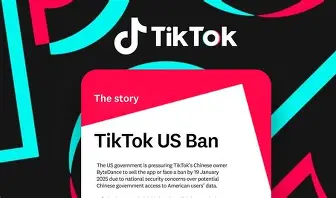
In 2025, the U.S. government passed a law targeting TikTok’s ownership.
The concern was not really about the app itself. It was about who controls it. TikTok is owned by ByteDance, a company based in China, and that raised serious questions among U.S. lawmakers.
The government gave TikTok a clear choice. Sell its U.S. operations to an approved buyer or face a nationwide ban.
You can read the
Protecting Americans from Foreign Adversary Controlled Applications Act details
As the deadline approached, things escalated quickly. TikTok even went offline briefly for U.S. users, which made it look like the ban had already started.
But that shutdown did not last, and the situation did not end there.
Why the U.S. wanted to ban TikTok
This was not just political noise. There were real concerns behind the move.
Data privacy
Lawmakers argued that user data from millions of Americans could potentially be accessed by Chinese authorities.
National security
There were fears that content on the platform could be influenced or manipulated at scale.
Lack of trust
TikTok struggled to fully convince regulators that its data systems were independent from its parent company.
For a deeper look, see
TikTok ban efforts in the United States explained
Why TikTok was not fully banned
This is where most people get it wrong.
Even after the law passed, TikTok did not disappear. And the reason is simple. Banning an app used by over 150 million Americans is not easy in practice.
There were several roadblocks.
Legal challenges slowed things down as TikTok pushed back against the decision.
Public pressure played a role because millions of creators and businesses depend on the platform.
Economic impact also mattered since a sudden shutdown would affect advertisers, brands, and the wider creator economy.
So instead of a clean ban, the situation turned into delays, negotiations, and uncertainty.
What changed in 2026
2026 is not about a ban actually happening. It is about how TikTok managed to avoid one.
After the 2025 deadline passed, enforcement did not turn into a permanent nationwide shutdown. Instead, the situation shifted toward ongoing negotiations.
TikTok continued operating in the U.S. while working on changes to address government concerns. This included efforts to restructure parts of its U.S. operations and improve transparency around how user data is handled.
At the same time, regulators did not step away. The pressure remained, but the approach changed from immediate action to long term control.
So the reality in 2026 is simple. TikTok is still running, but under constant scrutiny, and its future depends on how these concerns are handled.
Is TikTok still at risk of being banned?
Yes, but not in the way most people think.
There is no immediate shutdown coming out of nowhere. But the risk has not disappeared either.
The future depends on a few key factors.
If ownership concerns are not fully resolved, the pressure can return.
If U.S. policy shifts again, enforcement could become stricter.
If TikTok fails to meet expectations around data security, the conversation around a ban can restart quickly.
So the situation is stable for now, but not permanent.
What this means for U.S. users and creators
For regular users, nothing feels different. The app works, content is flowing, and daily usage continues.
But for creators and businesses, this situation should not be ignored.
TikTok is still a powerful platform, but it is not something you should rely on completely.
Smart creators are already diversifying. They are building presence on other platforms, growing direct audiences, and not depending on one app for everything.
Because if anything changes again, starting from zero is the worst position to be in.
Final thoughts
TikTok was never fully banned in 2025.
It was pushed to the edge, forced to adapt, and is still under pressure in 2026.
That is the real story.
Not a simple ban. Not a clean escape.
Just an ongoing situation that is far from over.
And that is exactly why people are still paying attention.
FAQs
Was TikTok banned in the U.S. in 2025?
No, TikTok was not fully banned in 2025. A law was passed that required the company to sell its U.S. operations or face a ban, but enforcement did not lead to a permanent shutdown.
Is TikTok still working in the U.S. in 2026?
Yes, TikTok is still available and widely used in the U.S. in 2026, although it remains under regulatory pressure.
Why did the U.S. want to ban TikTok?
The main concerns were data privacy, national security risks, and the app’s connection to its Chinese parent company, ByteDance.
Will TikTok be banned in the future?
It is possible but not certain. The decision depends on how ownership and data security concerns are handled going forward.
What should creators do if TikTok gets banned?
Creators should diversify their presence across platforms like YouTube Shorts and Instagram Reels and build direct audiences to reduce risk.