
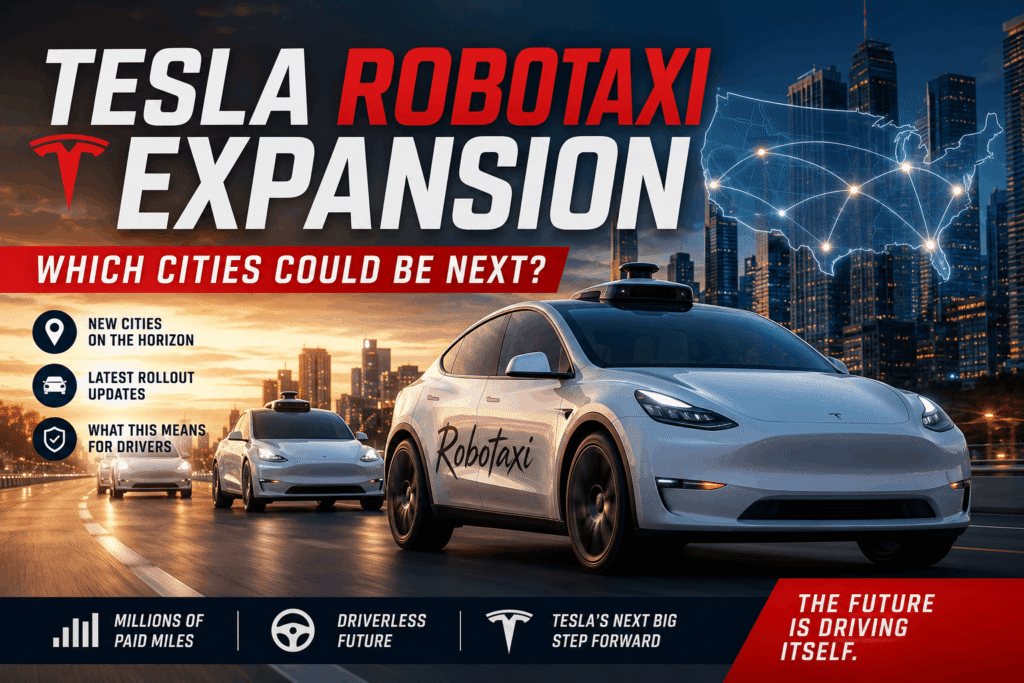
A few years ago, the idea of getting into a car with no driver sounded like science fiction. Today, that future is slowly becoming real.
Tesla has officially begun expanding its Robotaxi service across parts of the United States, marking one of the company’s biggest steps toward fully autonomous transportation. Instead of launching everywhere at once, Tesla is adding new cities one by one, testing its technology, collecting real-world data, and working with local regulators.
The Tesla Robotaxi Expansion may not be happening as quickly as Elon Musk once predicted, but it is moving forward. With new cities joining the network and more expected in the coming months, many Americans are wondering where Tesla will go next.
Here’s everything we know so far.
What Is Tesla’s Robotaxi Service?
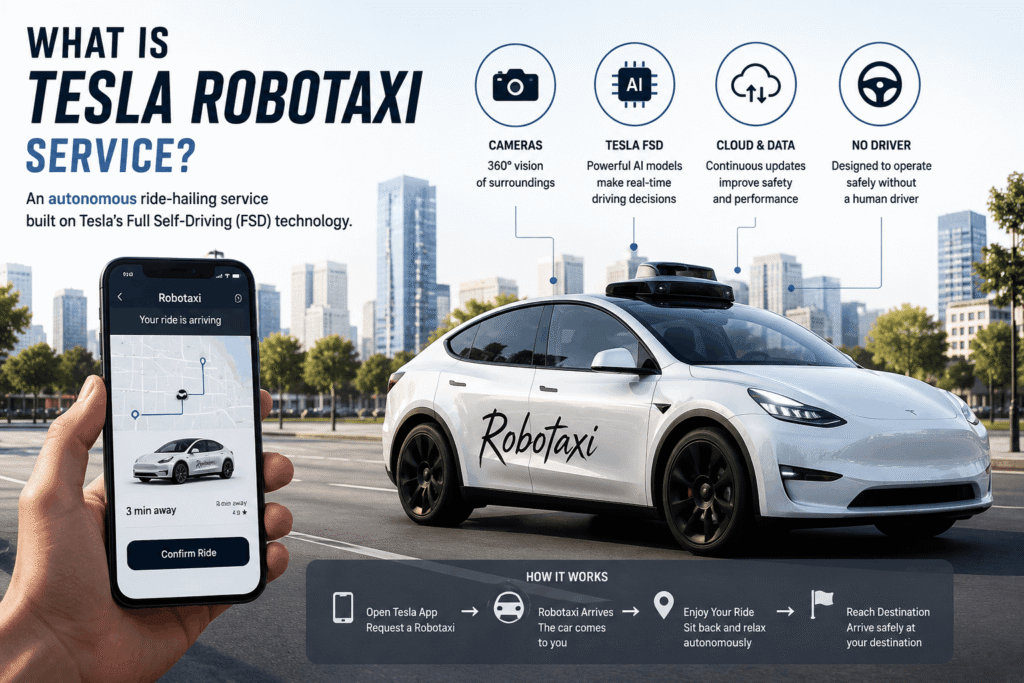
Tesla’s Robotaxi service is an autonomous ride-hailing platform designed to work much like Uber or Lyft. Instead of driving your own vehicle, you request a Tesla through an app and let the car take you to your destination.
The long-term goal is for these vehicles to operate without a human driver. Tesla’s system relies on cameras, artificial intelligence, and its Full Self-Driving (FSD) software to navigate roads safely.
Unlike some competitors that use lidar sensors, Tesla believes its camera-based approach can scale more efficiently while keeping costs lower.
If the technology continues to improve, Robotaxis could eventually become a common way for people to travel in cities across America.
Where Has the Tesla Robotaxi Rollout Reached?
The Tesla Robotaxi Rollout began with a limited launch in Austin, Texas. Rather than expanding nationwide immediately, Tesla has taken a gradual approach by adding cities where it can closely monitor performance and safety.
According to Reuters, the service now operates in Austin, Dallas, Houston, Miami, Orlando, and Tampa.
Tesla also shared an important milestone during its latest earnings report. Customers have completed nearly 2.5 million paid Robotaxi miles, including more than 380,000 miles driven without an in-vehicle safety driver.
Those numbers suggest the service is gaining momentum, even if the expansion is happening more carefully than many expected.
Which Cities Could Be Next?
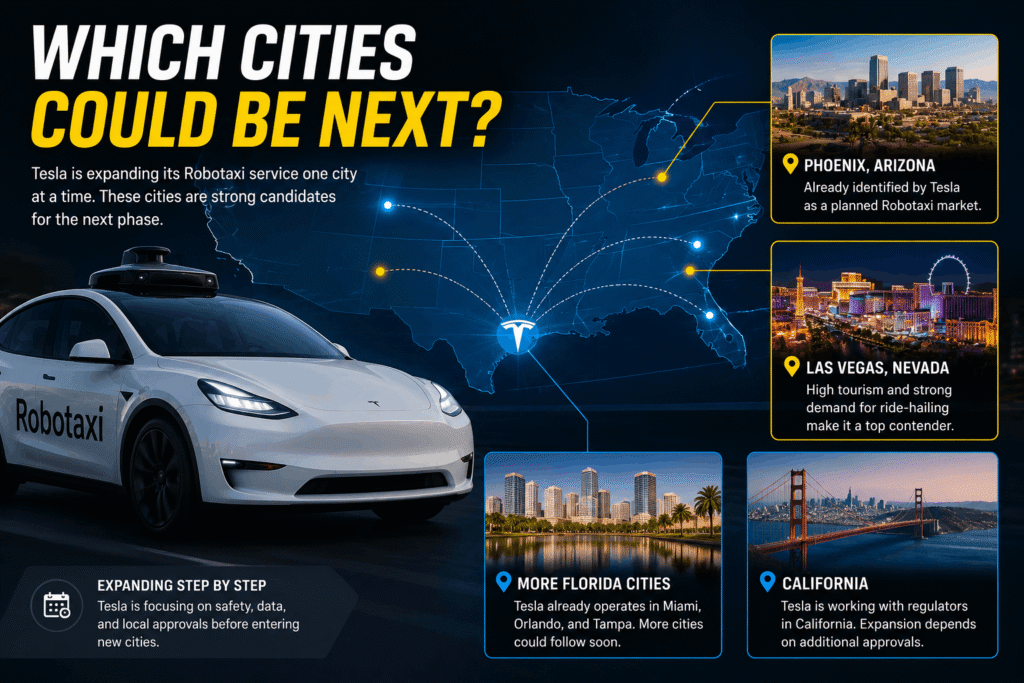
Tesla has not announced every future destination, but company statements and investor materials point to several strong candidates.
Phoenix, Arizona
Phoenix is widely considered one of the most likely cities to receive the next phase of the Tesla Robotaxi Expansion.
Arizona has welcomed autonomous vehicle testing for years, making it an attractive location for companies developing self-driving technology. Tesla has also identified Phoenix as one of its planned Robotaxi markets, making it a logical next step.
Las Vegas, Nevada
Las Vegas is another city that continues to appear in discussions about Tesla’s future plans.
With millions of visitors arriving every year, demand for convenient transportation is always high. A Robotaxi network could make it easier for tourists to travel between hotels, airports, restaurants, and entertainment venues.
More Florida Cities
Florida has quickly become one of Tesla’s biggest Robotaxi markets.
The company already operates the Tesla Robotaxi service in Miami, Orlando, and Tampa. If those locations continue performing well, Tesla could expand into additional cities across the state over the next few years.
California
California remains one of Tesla’s largest markets, but expanding there is more complicated.
The state has stricter rules for autonomous vehicles than many others. Tesla is continuing to work with regulators while operating supervised ride-hailing services in parts of the San Francisco Bay Area. Larger autonomous operations will depend on receiving additional approvals.
Why Is Tesla Taking a Slower Approach?
Many people expected Tesla to launch Robotaxis across the country much faster.
Instead, the company is focusing on getting each expansion right before moving to the next city.
One reason is safety.
Self-driving vehicles must be able to respond correctly to heavy traffic, pedestrians, emergency vehicles, road construction, and changing weather conditions. Even a small number of serious incidents could slow public acceptance and regulatory approvals.
Another reason is that autonomous vehicle rules vary from state to state. Every new market requires Tesla to work closely with local authorities before the service can begin.
During Tesla’s latest earnings call, Elon Musk said the company wants to expand “as fast as humanly possible,” while also making it clear that safety remains the top priority.
How Does Tesla Compare With Other Robotaxi Companies?
Tesla is not the only company trying to build a driverless transportation network.
Waymo currently operates fully autonomous ride-hailing services in multiple U.S. cities and has years of real-world experience.
Tesla believes its advantage comes from scale. Millions of Tesla vehicles already collect driving data every day, helping improve the company’s artificial intelligence system through continuous learning.
While Robotaxis represent Tesla’s future ambitions, the company is already one of the biggest names in electric vehicles. If you’re comparing today’s leading EVs before making a purchase, check out our guide to the best electric cars in the U.S. and U.K. for 2026.
For now, however, Waymo still operates the larger commercial Robotaxi network.
What Could This Mean for Everyday Drivers?
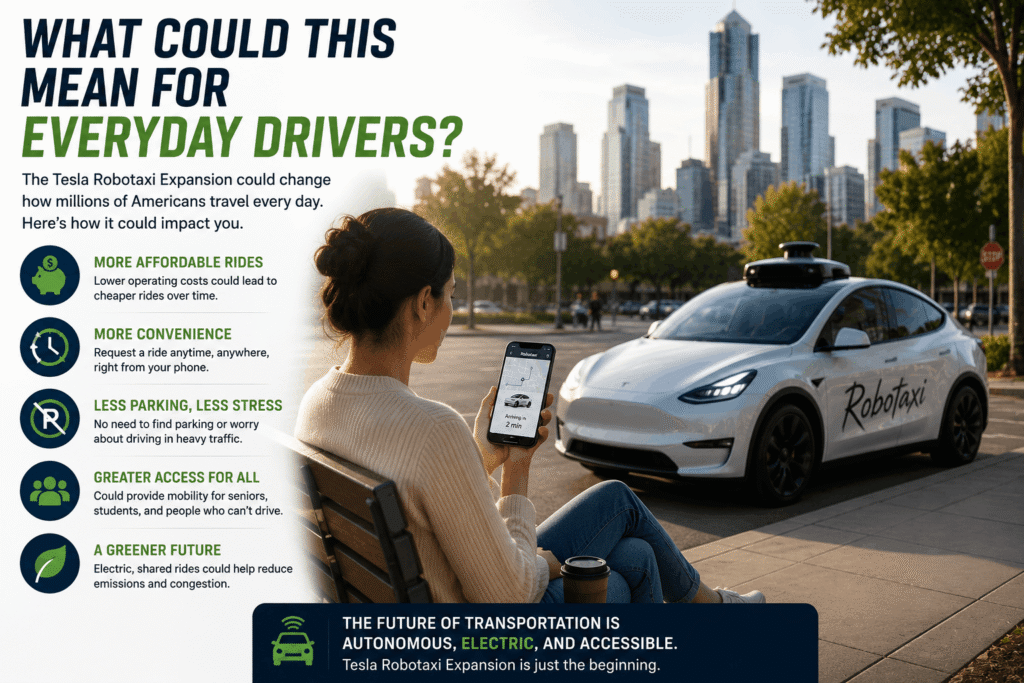
If the Tesla Robotaxi Expansion continues at its current pace, Americans may eventually have another transportation option that is both convenient and affordable.
Instead of driving yourself, paying for parking, or waiting for a traditional rideshare, you could simply request a Robotaxi through an app.
Supporters believe autonomous ride-hailing could reduce transportation costs, improve mobility, and make travel easier for people who cannot drive.
Still, public trust will be one of the biggest factors in Tesla’s success. Many people remain cautious about riding in a vehicle without a human driver, so the company will need to continue proving that its technology can operate safely in everyday situations.
Why Investors Are Watching So Closely
Robotaxis have become one of Tesla’s most important long-term projects.
Many analysts believe autonomous driving could become just as important to Tesla’s future as selling electric vehicles.
The company continues adding new cities, increasing paid Robotaxi miles, and has started production of the Cybercab at Gigafactory Texas. Although Tesla has not announced when Cybercab will begin carrying passengers, production marks another major step toward its autonomous transportation strategy.
Every expansion announcement gives investors another clue about how quickly Tesla can grow this business.
Final Thoughts
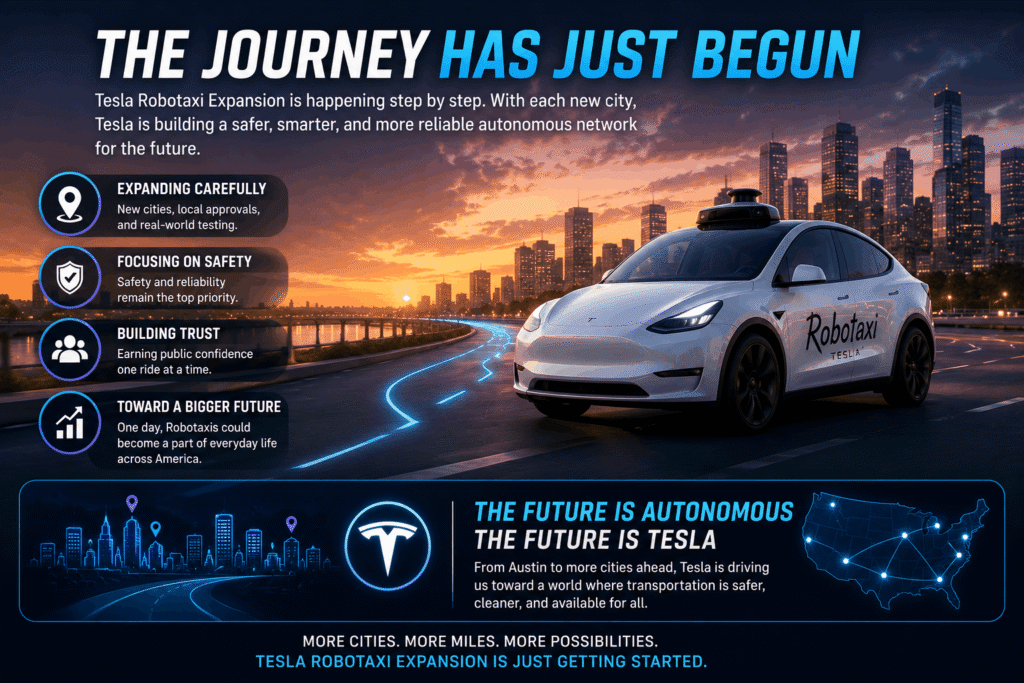
The Tesla Robotaxi Expansion is no longer just an ambitious promise. It is becoming a real service that is gradually reaching more American cities.
Tesla has already expanded beyond Austin into Dallas, Houston, Miami, Orlando, and Tampa. Phoenix and Las Vegas remain among the strongest candidates for future launches, while California could follow once additional regulatory approvals are secured.
The company is choosing steady progress over rapid expansion, and that approach may help build the safety record and public confidence needed for long-term success.
The next chapter of transportation is already beginning. The only question is which city will be next to welcome a Tesla Robotaxi.
FAQs
What is the Tesla Robotaxi Expansion?
The Tesla Robotaxi Expansion refers to Tesla gradually launching its autonomous ride-hailing service in additional U.S. cities after beginning with a limited rollout in Texas.
Which cities currently have Tesla Robotaxi service?
Tesla currently operates Robotaxi services in Austin, Dallas, Houston, Miami, Orlando, and Tampa as it continues expanding across the United States.
Which cities currently have Tesla Robotaxi service?
Tesla currently operates Robotaxi services in Austin, Dallas, Houston, Miami, Orlando, and Tampa as it continues expanding across the United States.
Which cities could Tesla expand to next?
Phoenix and Las Vegas are considered among the strongest candidates for future Tesla Robotaxi expansion, while additional Florida cities may also be added.
How does Tesla Robotaxi work?
Tesla Robotaxis use the company’s Full Self-Driving (FSD) software, cameras, and artificial intelligence to transport passengers through an autonomous ride-hailing service.
Is Tesla Robotaxi fully driverless?
Tesla has completed hundreds of thousands of miles without an in-vehicle safety driver, but expansion continues under regulatory approval and safety monitoring.
How is Tesla different from Waymo?
Waymo currently operates a larger commercial Robotaxi network, while Tesla focuses on a camera-based autonomous driving system that it believes can scale more efficiently.