
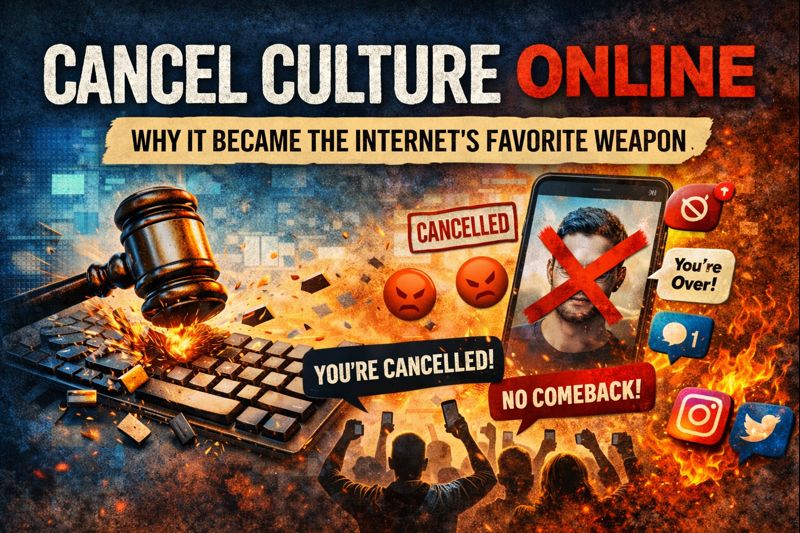
Cancel culture online isn’t about “accountability” anymore.
It’s about power.
One tweet, one clip, one bad take — and suddenly the internet turns into a firing squad. No context. No second chances. Just vibes, outrage, and a lot of people who feel very important for 24 hours.
And the scary part?
Most people don’t even know why they’re doing it.
Outrage Feels Like Control
Let’s be honest.
Calling someone out online feels good.
It makes people feel:
- Morally superior
- Louder than everyone else
- On the “right side”
- Seen and validated
For a lot of users, canceling someone isn’t about justice — it’s about control.
Control over the narrative.
Control over the crowd.
Control over who’s “allowed” to exist online.
That rush?
That’s why cancel culture online keeps spreading.
Social Media Rewards Chaos
The internet doesn’t reward calm discussions.
It rewards drama.
Anger gets clicks.
Shame gets shares.
Public meltdowns get views.
Platforms like Instagram and X (Twitter) are built on emotional reactions. The louder the outrage, the wider it spreads.
So when someone gets “canceled,” the algorithm doesn’t slow it down —
it pushes it harder.
Cancel culture online isn’t just social behavior.
It’s algorithm behavior.
Everyone Thinks They’re the Judge
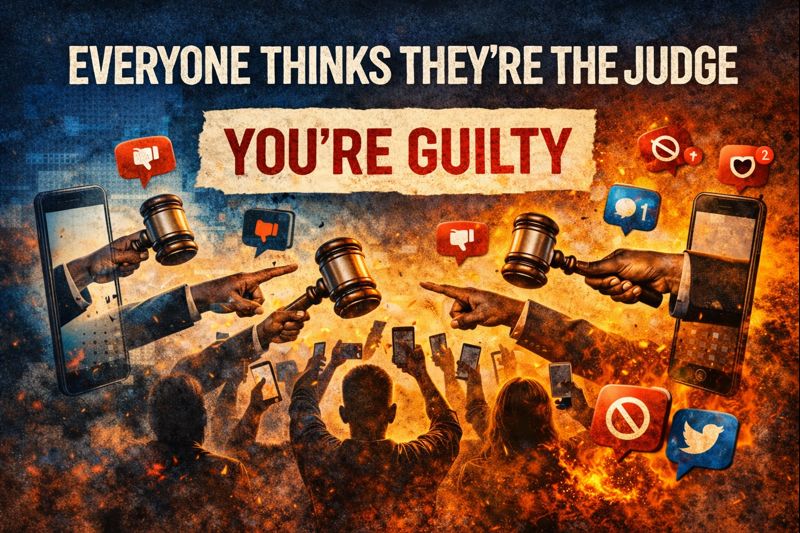
Online, there are no trials.
No context.
No nuance.
Just:
“This person is problematic.”
And boom — thousands agree.
The internet loves simple villains.
Reality is messy. Outrage is easy.
So instead of understanding situations, people choose sides, throw labels, and move on to the next target.
Canceling Became Entertainment
Let’s stop pretending this is all serious activism.
People don’t just cancel —
they watch.
They wait for:
- Apology videos
- Breakdown posts
- Reaction threads
- Meme edits
- Public meltdowns
It’s basically reality TV, except real people lose their careers, reputations, and mental health.
Even media giants like Vox and The New York Times keep analyzing cancel culture because people can’t look away.
Drama sells.
Human downfall sells more.
Nobody Knows the Rules
Here’s the funniest part.
Some people think cancel culture online is:
- Accountability
Others think it’s:
- Bullying
Some call it justice.
Others call it destruction.
There’s no rulebook.
Just mob energy.
One mistake gets forgiven.
Another ends careers.
Same crime.
Different reactions.
Make it make sense.
The Internet Loves Repetition
Cancel culture works the same way online content does:
Same outrage
Same format
Same cycle
Different target
Just like how every streaming show feels the same, internet outrage has become predictable too.
New villain.
Same script.
People pretend it’s shocking —
but they already know what’s coming.
Why People Keep Joining the Mob
Because cancel culture online gives people:
- Power
- Belonging
- Attention
- Entertainment
- Moral superiority
It fills emotional gaps.
And according to Pew Research, online spaces are becoming more polarized and emotionally charged — which only fuels this behavior.
People don’t just want to be right.
They want to feel right.
The Real Problem
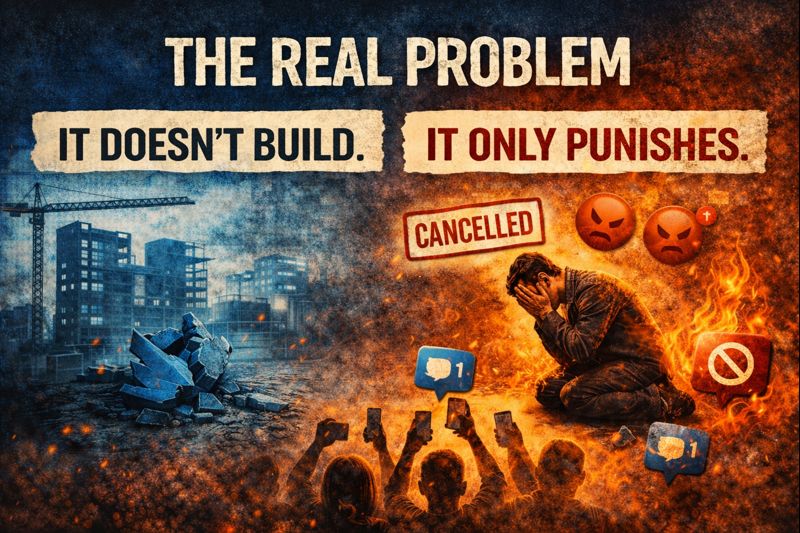
Cancel culture online doesn’t teach.
It doesn’t heal.
It doesn’t build.
It punishes.
And punishment feels good to people who feel ignored, powerless, or unheard.
That’s why it works.
That’s why it spreads.
That’s why it won’t disappear.
Is Cancel Culture Going Anywhere?
Nope.
As long as:
- Outrage gets attention
- Algorithms reward anger
- People crave validation
Cancel culture online will stay the internet’s favorite weapon.
Not because it’s fair.
But because it’s effective.
FAQs
Why is cancel culture online so popular?
Because it gives people attention, power, and a sense of moral superiority — all while social media algorithms reward outrage.
Is cancel culture online about accountability or punishment?
It depends who you ask. Some see it as accountability. Others see it as public shaming without context.
Why does outrage spread faster than facts online?
Emotional content gets more clicks, shares, and engagement than calm, logical discussions.
Does cancel culture online actually solve problems?
Not really. It usually punishes people instead of educating or creating real change.
Why do people enjoy calling others out on the internet?
It feels entertaining, validating, and gives a sense of control.
Will cancel culture online ever end?
Unlikely. As long as outrage gets attention, it will keep happening.
Who benefits most from cancel culture online?
Social media platforms, influencers, and media outlets — because drama drives traffic.