
A new Presidential Records Act ruling is putting the White House under legal pressure after a federal judge ordered officials to preserve and comply with federal record keeping laws. The decision comes amid growing concerns over deleted messages, encrypted communication apps, and executive branch transparency.
The court ruling has quickly become a major political and legal story in the United States because it directly affects how presidential records are stored, protected, and eventually released to the public.
For Americans following the White House Presidential Records Act controversy, the case raises larger questions about government accountability, digital communication, and presidential power in the modern era.
What Is the Presidential Records Act and Why Does It Matter?
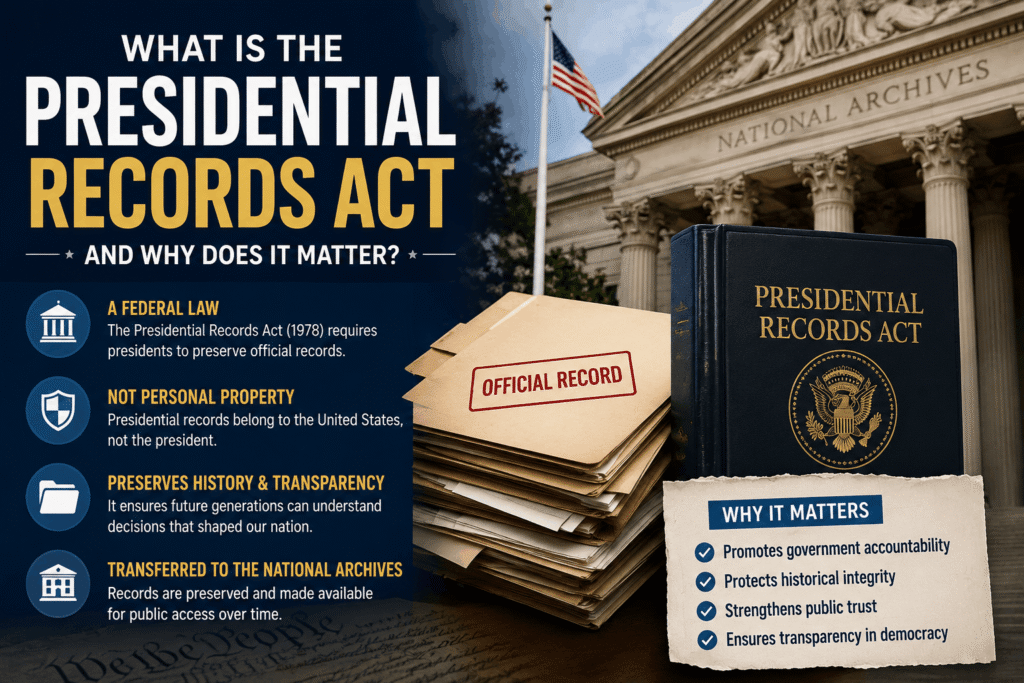
The Presidential Records Act explained in simple terms is this: official White House records are not personal property. They belong to the U.S. government and must eventually be transferred to the National Archives.
Congress passed the law in 1978 after the Watergate scandal and President Richard Nixon’s attempt to control presidential materials after leaving office. According to the American Historical Association’s legal challenge defending the Presidential Records Act, the law was specifically designed to prevent presidents from hiding or destroying official records.
That includes:
- Emails
- Internal memos
- Text messages
- Meeting notes
- Digital communications tied to government business
The issue matters far more today because modern administrations rely heavily on smartphones, encrypted apps, and private messaging platforms.
Americans already understand how easily messages disappear on apps like Signal, WhatsApp, and Telegram. That reality is exactly why watchdog groups and historians became alarmed over recent White House recordkeeping disputes.
Why Did a Federal Judge Order White House Compliance?
The latest Presidential Records Act ruling gained national attention after U.S. District Judge John Bates ordered executive branch officials to preserve records connected to government business.
According to a recent Reuters report on the federal judge’s ruling, the court issued a preliminary injunction requiring many White House officials to follow federal preservation standards while the legal fight continues.
The case escalated after a Justice Department legal memo argued that parts of the Presidential Records Act may interfere with executive authority. Legal critics immediately warned that the position could weaken transparency protections and public oversight.
The judge rejected much of that argument and noted that presidents from both parties have followed the law for decades.
That point carries serious legal weight.
Federal courts rarely support abrupt changes to long-established government procedures without overwhelming constitutional justification. In this case, the court appeared unconvinced that the White House could bypass existing recordkeeping obligations.
Does the Presidential Records Act Apply to Digital Messages?
Yes. Legal experts argue that the White House Presidential Records Act applies not only to paper documents but also to emails, encrypted chats, text messages, and internal digital communications tied to official government business.
That issue has become increasingly important as federal officials rely more heavily on encrypted communication apps that can automatically delete conversations.
According to a recent CREW statement on preserving White House communications, watchdog groups specifically raised concerns about disappearing digital messages and compliance failures involving modern communication platforms.
For younger Americans, the controversy feels surprisingly relatable.
People already know how quickly online content disappears. Instagram Stories vanish. Signal messages auto-delete. Entire conversations disappear from phones every day.
The difference is that official White House communications are considered part of public government history.
Why the Presidential Records Act Ruling Is Trending Across the U.S.
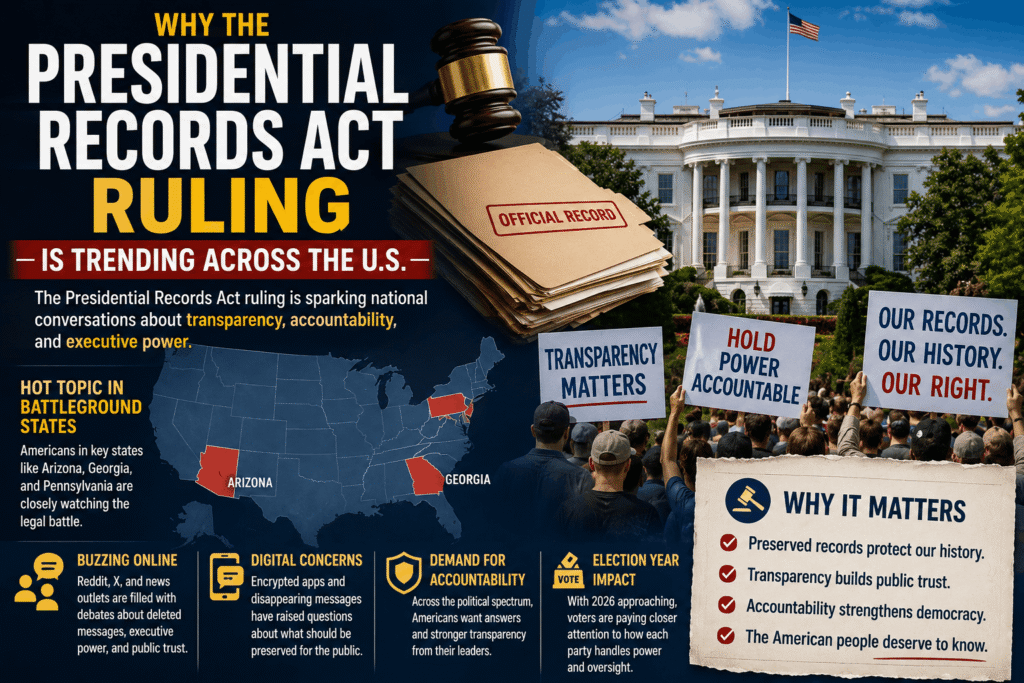
The Presidential Records Act ruling is gaining traction because Americans increasingly view government transparency as directly connected to everyday life.
After years of political fights involving classified documents, deleted texts, and federal investigations, public trust in institutions remains deeply divided across the country.
In battleground states like Arizona, Georgia, and Pennsylvania, debates surrounding government accountability have become central political issues heading into the 2026 election cycle.
Many Americans online are comparing this controversy to corporate executives deleting evidence during major investigations. Others argue federal officials should face stricter standards than private companies because taxpayers fund the entire government system.
The frustration has become especially visible across Reddit, X, and legal commentary forums where users continue debating whether presidents should have greater control over government records.
Similar legal tensions have already appeared in other high-profile federal disputes, including California’s ongoing battle over troop deployment authority and state rights explored in this breakdown of the California vs federal troops legal battle.
How the Trump Presidential Records Act Case Escalated
The broader Trump Presidential Records Act case intensified after the Justice Department’s Office of Legal Counsel released a controversial memo questioning parts of the law’s constitutionality.
According to an ABC News report on DOJ arguments involving presidential records law, critics warned the administration’s position could allow future presidents to exercise greater control over which records survive public scrutiny.
Several organizations, including historians and government watchdog groups, quickly filed lawsuits challenging that interpretation.
The issue became politically explosive because of Donald Trump’s earlier disputes involving classified documents and presidential materials after leaving office.
Even though Judge Bates’ order does not directly apply to President Trump personally, the ruling still forces much of the executive branch to preserve official communications while the larger constitutional battle continues.
The court fight is also becoming part of broader election conversations as voters compare how both parties approach executive power, transparency, and federal oversight in discussions surrounding Trump vs Biden 2026 policies.
Could the White House Face Stricter Digital Recordkeeping Rules?
The latest Presidential Records Act ruling could eventually reshape how future administrations manage digital communication.
Legal experts believe future White Houses may face stricter standards involving:
- Automatic archiving of text messages
- Monitoring of encrypted communication platforms
- Expanded National Archives oversight
- Mandatory preservation systems for executive staff
This matters because government communication has evolved dramatically since the 1970s.
Back then, official records mostly involved paper documents, typed memos, and recorded phone conversations. Today, sensitive discussions often happen through encrypted chats and rapidly changing digital platforms.
That creates serious challenges for historians, journalists, investigators, and ordinary Americans trying to understand how government decisions are made.
According to recent Washington Post coverage of White House records policy changes, legal experts increasingly worry that disappearing-message technology could complicate future investigations and historical accountability.
Why This Ruling Matters Beyond Politics
One reason the Presidential Records Act ruling is attracting major Google search traffic is because it extends beyond traditional Republican versus Democrat political fights.
The larger issue is public transparency.
Most Americans generally agree that presidents should not have unlimited authority to erase government history whenever records become politically inconvenient.
That concern becomes especially important during moments involving military operations, economic crises, emergency declarations, or federal investigations.
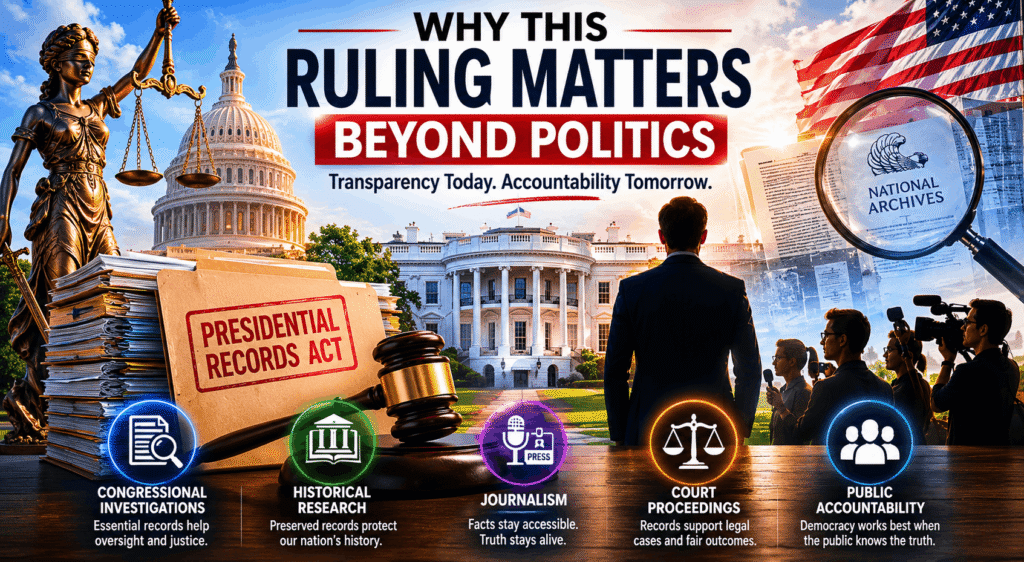
Preserved presidential records often become essential for:
- Congressional investigations
- Historical research
- Journalism
- Court proceedings
- Public accountability
Without proper preservation systems, future Americans may never fully understand how major national decisions were made behind closed doors.
The ruling also arrives during broader national debates about executive power and constitutional authority. Those debates are likely to intensify as courts continue reviewing the limits of presidential control over official records.
As appeals continue, the Presidential Records Act ruling is likely to remain one of the most closely watched legal disputes involving executive power and government transparency in 2026.
For many Americans, the case is no longer just about presidential paperwork. It has become a larger debate over how much information the public has the right to see from the people running the federal government.
FAQs
What is the Presidential Records Act?
The Presidential Records Act is a federal law requiring official White House records to be preserved and transferred to the National Archives after a president leaves office.
Why is the Presidential Records Act ruling important?
The Presidential Records Act ruling matters because it reinforces government transparency rules and limits executive control over official presidential records.
Why did the federal judge order White House compliance?
The judge ruled that White House officials must preserve records connected to government business while legal disputes over the law continue in federal court.
Does the Presidential Records Act apply to digital messages?
Yes. Legal experts argue the law applies to emails, text messages, encrypted chats, and other digital communications related to official government activity.
How does the Trump Presidential Records Act case affect future presidents?
The case could reshape how future administrations handle digital communications, encrypted messaging apps, and presidential record preservation.