
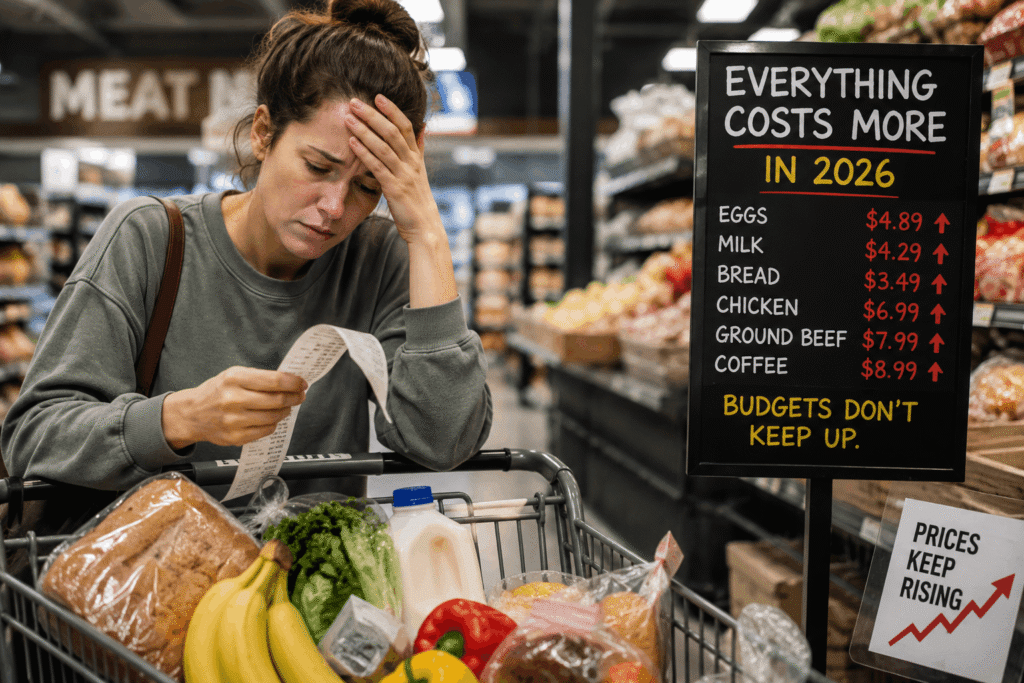
Americans are working longer hours, picking up side hustles, and earning more money on paper than they did a few years ago. Yet millions of people still feel like they are barely staying afloat financially.
A quick grocery trip feels expensive. Gas station totals feel painful. Even grabbing coffee or ordering takeout now comes with a second thought. That growing pressure is exactly why so many people say Americans feel financially exhausted in 2026.
For many households, surviving now feels more expensive than living used to.
According to the latest U.S. inflation report from the Bureau of Labor Statistics, inflation climbed to 3.8% in April 2026, with major increases tied to food, transportation, and energy costs.
This is no longer just an economics conversation. It is daily American life.
Why Do Americans Feel Financially Exhausted Right Now?
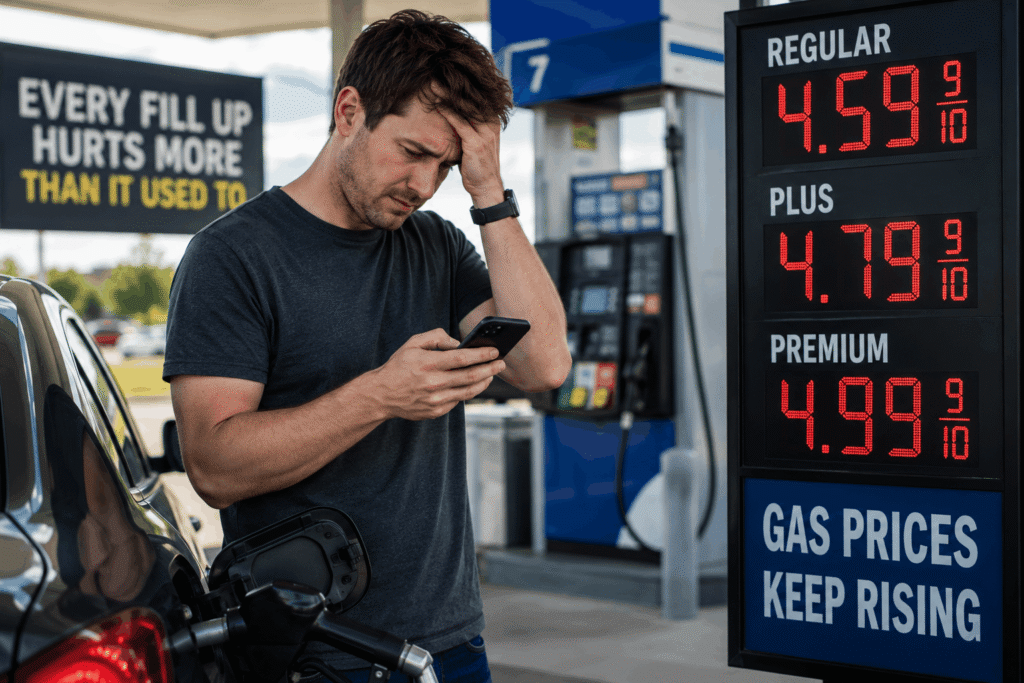
The biggest reason is simple. Everyday life costs noticeably more than it did just a few years ago.
Americans are seeing higher prices almost everywhere:
- groceries
- rent
- car insurance
- gas
- streaming subscriptions
- utility bills
- fast food
- healthcare
That constant financial pressure creates what many online now describe as financial burnout.
According to AAA’s latest national gas price averages, regular gasoline reached around $4.51 per gallon this week.
In California, some Los Angeles drivers are already paying well above $5 per gallon, especially in high traffic urban areas. That turns normal commuting into a major monthly expense for working families.
Meanwhile, Americans using apps like GasBuddy, Walmart, Costco, and Instacart are increasingly comparing prices just to keep weekly spending under control.
The emotional exhaustion comes from the fact that these costs never seem to stop rising.
Is the Cost of Living Crisis in the USA Getting Worse?
For many middle class Americans, the answer feels like yes.
A recent Washington Post analysis on rising grocery prices showed major increases in staple food categories including beef, eggs, coffee, and fresh produce.
People are noticing it immediately because groceries are unavoidable. Families can delay buying electronics or vacations, but they cannot stop eating.
That frustration is spreading quickly online.
On Reddit and X, Americans regularly post screenshots showing fast food meals costing nearly the same as restaurant dinners. Others are shocked by how much everyday essentials cost compared to just two or three years ago.
In Phoenix, Arizona, many renters are still struggling with elevated housing costs after years of aggressive rent increases. In parts of Florida, homeowners are facing rising insurance bills on top of already expensive housing payments.
These regional pressures make the broader cost of living crisis USA feel personal instead of theoretical.
Why Are Americans Struggling Financially Even With Good Jobs?
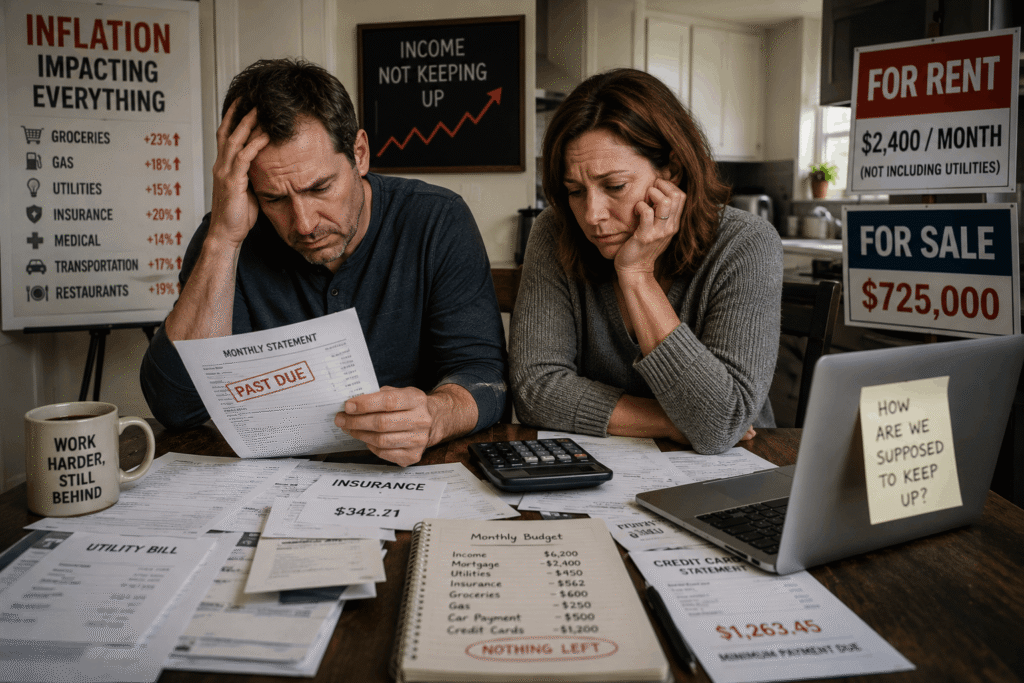
One of the biggest shifts happening right now is that financial stress is no longer limited to lower income households.
Many Americans with stable careers and decent salaries still feel financially overwhelmed. That includes professionals earning six figures in cities like Seattle, Austin, Boston, and New York City.
Housing remains one of the biggest problems.
Mortgage rates are still elevated. Apartment rents remain high in many urban areas. Property taxes, utilities, and insurance costs continue climbing.
That explains why so many Americans online keep repeating the same feeling:
“I make more money than ever, but somehow feel poorer.”
For many workers, salary increases simply are not keeping pace with the real cost of living.
Recent reporting from The Times economic coverage also shows inflation continues outpacing wage growth in several major spending categories tied directly to everyday life.
People are working harder while feeling less financially secure.
That disconnect is emotionally draining.
Some households are also dealing with delayed financial relief after recent IRS tax refund processing issues created additional stress for taxpayers.
How Rising Prices in America Are Changing Everyday Behavior
Americans are quietly changing their daily habits because of rising costs.
More people are:
- cooking at home
- canceling subscriptions
- driving less often
- delaying vacations
- skipping concerts and entertainment
- using buy now pay later apps
- searching for cheaper grocery alternatives
That behavioral shift is becoming increasingly visible across the country.
Searches for terms like:
- cheap meal prep ideas
- affordable family vacations
- best gas prices near me
- side hustles from home
- emergency savings tips
continue trending because people are actively trying to reduce financial pressure.
Even social habits are changing.
Many younger Americans now avoid expensive nights out entirely because restaurant bills, Uber costs, parking fees, and tipping expectations add up too quickly.
Many households are also canceling entertainment platforms and cutting recurring bills as hidden subscription costs continue adding pressure to monthly budgets.
According to a recent MarketWatch report on consumer spending pressure, Americans are still spending money, but increasingly through credit cards and financing options rather than disposable income.
That may temporarily maintain consumer activity, but it also increases long term debt stress.
Are Americans Losing Confidence in the Economy?
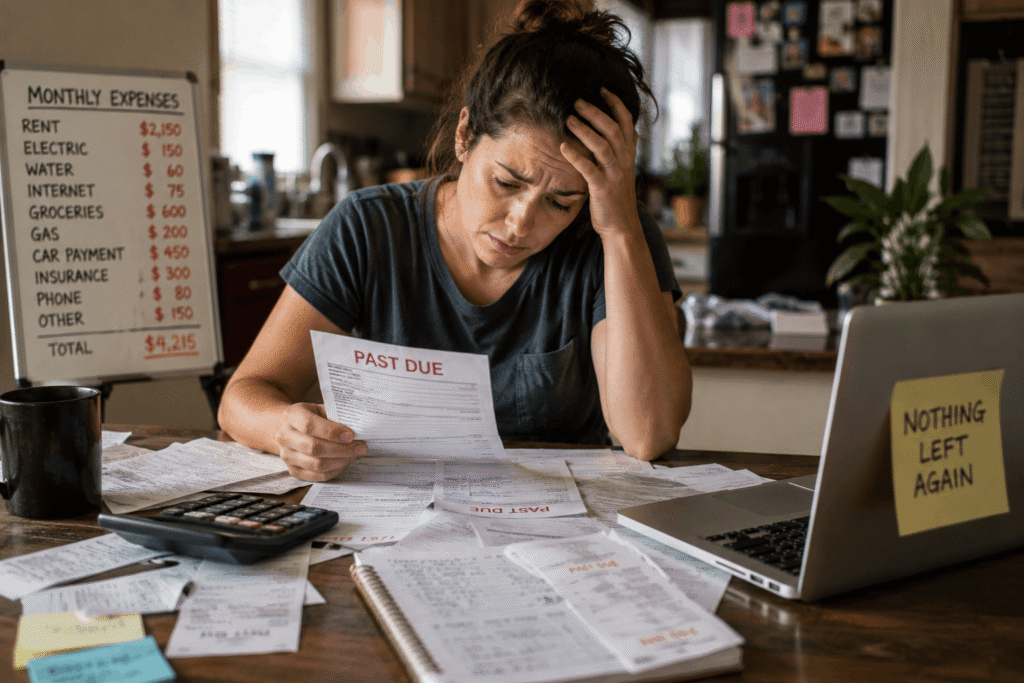
In many ways, yes.
A growing number of Americans feel disconnected from headlines claiming the economy is doing well because their personal financial reality feels completely different.
Most people judge the economy based on:
- grocery prices
- rent payments
- gas station totals
- utility bills
- restaurant costs
That is why official economic optimism often feels disconnected from everyday American life.
For example, inflation may technically be lower than pandemic peaks, but consumers still remember when groceries, gas, and housing felt significantly more affordable.
Prices rarely return to old levels once they rise.
That psychological effect matters because Americans mentally compare every purchase to what it used to cost just a few years ago.
Many workers are also becoming increasingly anxious about long term stability. Searches tied to second jobs, passive income, emergency savings, and recession fears continue climbing because people want more financial control.
Younger Americans especially remain anxious about long term debt, particularly around the future of student loan forgiveness programs and repayment costs.
What Happens Next for Americans Facing Financial Stress?
Right now, several pressures are still building simultaneously.
Energy prices remain unstable. Grocery inflation continues hurting household budgets. Housing affordability remains a serious challenge across many U.S. cities.
Recent AAA fuel price updates show fuel prices are still climbing across several states, especially throughout the West Coast.
Federal inflation data also continues showing pressure in transportation, food, and utilities according to the current CPI consumer price report.
That means many Americans will likely continue adjusting spending habits throughout the rest of 2026.
The bigger issue, however, is emotional exhaustion.
People are tired of feeling stressed every time they check their bank account. They are tired of normal life feeling financially heavy. And they are tired of working harder without feeling more secure.
That emotional reality explains why so many Americans today feel financially drained despite doing everything they were told would lead to stability.
And honestly, that feeling may define daily American life more than any official economic headline this year.
FAQs
Why do Americans feel financially exhausted in 2026?
Many Americans feel financially exhausted because rising prices for groceries, housing, gas, insurance, and utilities continue increasing faster than incomes. Everyday expenses now place heavy pressure on household budgets.
What is causing the cost of living crisis in the USA?
The cost of living crisis in the USA is being driven by inflation, expensive housing markets, rising fuel costs, higher insurance premiums, and increased prices for everyday essentials like food and transportation.
Why are Americans struggling financially even with good jobs?
Many Americans with stable jobs still struggle financially because wages are not keeping up with rising living costs. Housing, healthcare, groceries, and debt payments continue consuming a larger share of income.
Are rising prices in America affecting middle class families?
Yes. Rising prices in America are heavily affecting middle class households, especially families dealing with rent, mortgages, childcare, insurance, and grocery expenses.
Why do people feel poorer even while earning more money?
People often feel poorer because inflation has reduced purchasing power. Even if salaries increase, higher costs for food, housing, fuel, and services can make financial progress feel impossible.