

If you’ve been scrolling X, Reddit, or your news app this week, you’ve seen the headlines. The hantavirus cruise ship story has taken over every major news feed in America. A vessel in the Atlantic is at the center of an outbreak that has already killed three people, sickened several more, and sent health officials in over a dozen countries scrambling to track down passengers. Americans from Arizona to Georgia to Virginia are being monitored right now.
This isn’t a drill. But it’s also not COVID 2.0. Here’s everything you actually need to know, in plain English, no panic required.
What Is the MV Hondius Hantavirus Outbreak and How Did It Start?
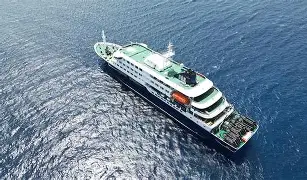
The MV Hondius is a Dutch-flagged expedition cruise ship operated by Oceanwide Expeditions. It set sail from Ushuaia, Argentina on April 1, 2026, carrying around 147 passengers and crew from 23 different countries, including 17 Americans.
The first passenger, a 70-year-old Dutch man, fell ill on April 6 with fever, headache, abdominal pain, and diarrhea. He died on board on April 11. His wife fell ill shortly after, deteriorated mid-flight to Johannesburg, South Africa, and died on April 26. A third passenger, a German national, also died.
The hantavirus cruise ship situation was officially confirmed to the public by the WHO on May 2, 2026. As of May 8, 2026, there are five confirmed and four suspected cases, totaling eight to nine infections linked to the voyage.
Investigators believe the Dutch couple most likely contracted the virus before they boarded, during a birdwatching trip through Argentina, Chile, and Uruguay. Argentine officials are now tracing their exact route and testing rodents found along the way.
What Is the Andes Virus and Why Does This Strain Make the MV Hondius Outbreak Unusual?
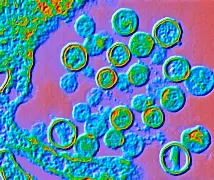
Here’s where this MV Hondius hantavirus story gets unusual. Most hantavirus strains spread only from rodents to humans, typically through contact with infected mouse or rat droppings, urine, or saliva. You can’t catch regular hantavirus from another person.
The Andes virus is different.
It is the only known hantavirus strain that can spread person to person, and it’s the strain the WHO confirmed in this outbreak on May 7, 2026. That’s not a social media rumor, that’s confirmed by PCR lab testing in South Africa.
The spread still requires prolonged, close contact, things like:
- Living together as a couple
- Sharing utensils or bedding
- Exposure to an infected person’s respiratory secretions
It does not spread through casual touch or being in the same room briefly. Think extended close contact, not standing next to someone in a Walgreens checkout line.
Both the WHO and CDC have stated clearly: this is not airborne like COVID-19. There is no evidence of widespread transmission risk to the general public.
Hantavirus Symptoms 2026: What to Watch For If You Were Exposed
If you or someone you know was on the MV Hondius, or had close contact with anyone who was, here are the hantavirus symptoms 2026 health officials say to watch for right now.
Early symptoms (days 1 to 5) look a lot like the flu:
- Fever and chills
- Muscle aches, especially in the thighs, hips, and back
- Headache
- Fatigue
- Stomach pain, nausea, or diarrhea
The dangerous turn happens fast. Within days, some patients rapidly progress to:
- Shortness of breath
- Rapid-onset pneumonia
- Acute respiratory distress syndrome (ARDS)
The CDC notes that symptoms can appear anywhere between 4 and 42 days after exposure. That’s up to six full weeks. That long incubation window is exactly why health officials are monitoring people so closely right now, even those who feel completely fine today.
There is no specific antiviral treatment for hantavirus. Patients receive supportive care, meaning fluids, rest, oxygen support, and ICU monitoring in severe cases. Catching it early is the single biggest factor in survival.
If you think you’ve been exposed, don’t wait. Contact your doctor immediately and mention the hantavirus cruise ship connection directly, so they know what they’re looking for.
Hantavirus Death Rate: How Dangerous Is This Outbreak Really?

Let’s get straight to what most Americans are actually Googling right now. The hantavirus death rate for Hantavirus Pulmonary Syndrome (HPS) caused by the Andes virus is historically around 36 percent. That number is real and it is serious.
In this specific hantavirus outbreak 2026, three of the roughly eight to nine known cases have resulted in death, which tracks closely with that historical average.
For broader context, CDC data from 1993 to 2023 recorded 890 total hantavirus cases across the U.S. over 30 years, with about 35 percent resulting in death. This is a rare virus, but a genuinely dangerous one when someone does get infected.
Now here’s what keeps this from being a reason to panic:
Transmission requires close, sustained contact. The general American public is not at risk from everyday exposure. You are not going to catch this at a Walmart in Columbus or on the Chicago L train.
The CDC has classified its response as a Level 3 emergency, the lowest tier on its emergency scale. WHO Director-General Dr. Tedros Adhanom Ghebreyesus said directly: “While this is a serious incident, WHO assesses the public health risk as low.”
Health officials in Arizona, California, Georgia, Texas, and Virginia are actively monitoring returning passengers. As of May 8, 2026, not one of them has shown symptoms.
What Is the U.S. Government Doing About the Hantavirus Cruise Ship Right Now?
The American response has been fast and coordinated. Here’s exactly what is happening as of May 9, 2026.
Repatriation flight: The 17 American passengers still aboard the MV Hondius are being evacuated on a U.S. government medical repatriation flight. The CDC deployed a team of epidemiologists directly to the Canary Islands, where the ship is expected to dock on May 10.
Nebraska quarantine: American passengers will be transported to the National Quarantine Center at the University of Nebraska Medical Center in Omaha, via Offutt Air Force Base. Nebraska Medicine CEO Dr. Michael Ash confirmed: “We are prepared for situations exactly like this. Our teams have trained for decades.”
Flight monitoring: Two New Jersey residents who were on the same flight as an infected passenger are being monitored. The CDC is also contacting state health departments in every state where passengers have returned home.
International tracking: Health officials in over a dozen countries are doing contact tracing right now. France is monitoring eight nationals who were on the same flight as the Dutch woman who died. Singapore, Canada, the UK, Switzerland, and Germany all have confirmed cases or people under close observation.
The CDC’s live hantavirus situation page is your best source for current U.S.-specific guidance and is being updated as new information comes in.
Is the Hantavirus Outbreak 2026 Going to Become the Next COVID?
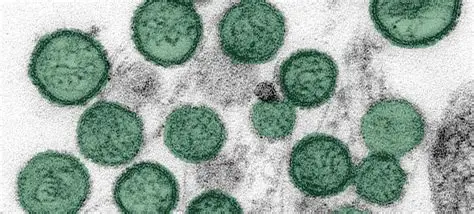
No. And here’s why experts are confident about that, not just hoping for the best.
COVID-19 spread efficiently through the air with a reproductive number estimated above 2.5 in its early days. It infected people sitting across a room from each other, sometimes on a single shared elevator ride.
Andes virus does not work that way. Even in previous documented outbreaks, spread was limited to close household contacts. A well-studied 2018 to 2019 outbreak in Argentina showed a reproductive number of about 2.12 before interventions, which dropped to 0.96 after isolation measures kicked in. It became self-limiting quickly once people were isolated and quarantined.
The WHO is not projecting a large epidemic from this hantavirus outbreak 2026. There are no models suggesting community spread in American neighborhoods. The virus has been caught early, passengers are being tracked across 23 nationalities, and the containment playbook is already running at full speed.
That said, the incubation window of up to six weeks means additional cases could still surface over the coming weeks. Health officials are expecting that possibility. It does not mean the situation is spiraling out of control, it means the global health system is working exactly as designed.
Stay informed through the CDC and WHO. Do not get your medical updates from TikTok reels.
Key Takeaways: What Every American Needs to Know Right Now
- The hantavirus cruise ship outbreak on the MV Hondius has produced 8 to 9 cases and 3 deaths as of May 8, 2026
- The confirmed strain is the Andes virus, the only hantavirus known to spread person to person
- Spread requires prolonged, close contact, not casual everyday interaction
- 17 Americans were aboard and are being repatriated to a quarantine facility in Omaha, Nebraska
- Passengers in Arizona, California, Georgia, Texas, and Virginia are being monitored with no symptoms reported
- The hantavirus death rate for this strain runs historically around 36 percent, making early detection critical
- The CDC and WHO both assess the public health risk as low for the general American population
- The ship is docking in Tenerife, Spain on May 10, 2026
Sources:
- CDC Hantavirus Situation Summary (updated May 8, 2026)
- WHO Disease Outbreak News: MV Hondius (May 4, 2026)
- CDC Official Statement on M/V Hondius (May 8, 2026)
- CNN: Countries Race to Track Hantavirus (May 7, 2026)
- Live Science: Live Updates on MV Hondius (May 8, 2026)
FAQs
Can you catch hantavirus from another person?
Most hantavirus strains do not spread between humans. However, the Andes strain linked to this outbreak has shown limited human-to-human transmission in rare cases involving close contact.
Is hantavirus worse than COVID?
Hantavirus is far rarer than COVID, but severe cases can have a higher fatality rate. Experts say the overall public risk remains much lower than during the COVID pandemic.
Is there a hantavirus vaccine?
There is currently no widely available hantavirus vaccine approved for public use in the United States.
Is it safe to go on a cruise right now?
Health authorities are not recommending broad cruise cancellations. The outbreak is currently tied to one expedition vessel rather than the cruise industry as a whole.
1 thought on “Hantavirus Cruise Ship Outbreak 2026: Everything You Need to Know About MV Hondius”