
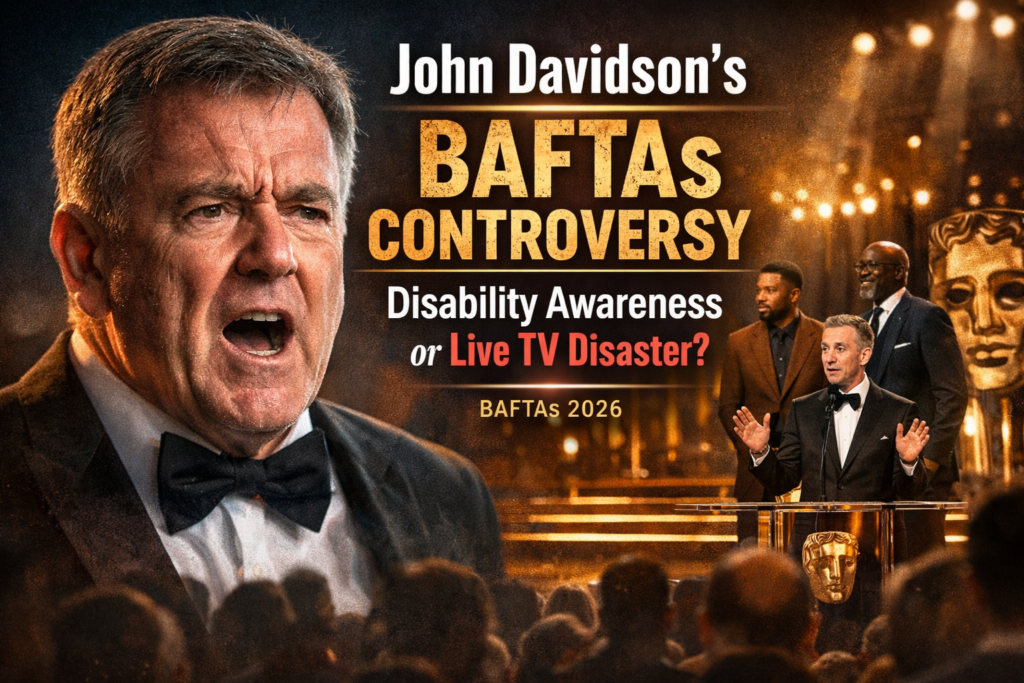
The John Davidson BAFTAs controversy didn’t just interrupt an awards show. It triggered a global debate about disability, race, and broadcast responsibility — all in a matter of seconds.
Most awards show moments fade by the next morning. This one didn’t.
Because this wasn’t a wardrobe malfunction or an off-script joke. It was an involuntary outburst, aired live, involving a racial slur — and the world heard it.
Let’s break down what actually happened, why it exploded, and why it’s bigger than just one uncomfortable moment.
Who Is John Davidson?
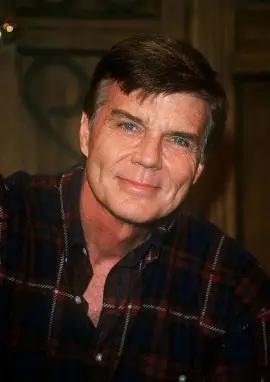
John Davidson is a Scottish Tourette’s syndrome activist who has been in the public eye since childhood. Many people were first introduced to him through a BBC documentary that followed his life with the condition.
He later became a prominent advocate for disability awareness and was appointed an MBE for his services to people with Tourette’s syndrome.
His life story was recently adapted into the biographical film I Swear, which brought renewed public attention to his journey. That connection is partly why he was invited to attend the 79th British Academy Film Awards in 2026.
If you want background on Tourette’s itself, the CDC’s overview of Tourette syndrome explains how vocal tics can be involuntary and, in some cases, include socially inappropriate language.
What Happened at the BAFTAs?
The incident occurred during the 79th British Academy Film Awards, held in London and broadcast internationally.
During the live ceremony, microphones picked up several of Davidson’s involuntary vocal tics. At one point, as presenters including Michael B. Jordan and Delroy Lindo were on stage, one vocalization included a racial slur that was clearly audible on the broadcast.
The moment immediately shifted the tone of the room.
Host Alan Cumming paused the ceremony to explain that the language came from Davidson’s Tourette’s symptoms and asked the audience for empathy and understanding.
But once something like that goes out live — especially internationally — context doesn’t control the reaction.
Major outlets including The Guardian’s coverage of the backlash reported on the divided reaction that followed.
Why the Backlash Was Immediate
The controversy wasn’t just about what was said. It was about impact.
Even if the outburst was involuntary, the slur was heard by millions — including audiences in the United States. For many viewers, intent didn’t erase the harm of hearing that word broadcast during a major cultural event.
Critics questioned why the language wasn’t edited out, especially given that awards shows typically operate on a short broadcast delay. That brought attention to the role of the broadcaster and production safeguards.
According to reporting from The Washington Post, the BBC later issued an apology and temporarily removed the ceremony from its streaming platform before editing the offensive language.
But by then, the clip had already circulated.
And once it hits social media, it’s no longer just a production mistake — it becomes a cultural flashpoint.
Disability Awareness vs. Social Harm
This is where the debate gets complicated.
On one side, disability advocates emphasized that Tourette’s syndrome is a neurological condition. Vocal tics, including inappropriate language, are not conscious choices. Blaming someone for involuntary symptoms misunderstands the condition entirely.
On the other side, critics argued that regardless of intent, the broadcast decision allowed harmful language to reach viewers — and that responsibility falls on production teams, not just the individual.
Several public figures weighed in publicly, intensifying the debate and keeping the John Davidson BAFTAs controversy trending beyond the usual awards-show news cycle.
The Broadcast Question Nobody Can Ignore
Live television is unpredictable. That’s nothing new.
But awards shows use delay systems precisely to prevent explicit language from airing unfiltered. The fact that the slur was broadcast internationally raised serious questions about production oversight.
Was it a technical failure? A delay miscalculation? A judgment call gone wrong?
The British broadcaster later acknowledged the mistake, with details covered by BBC News’ official response report after the ceremony.
Because when a major event fails to filter offensive language, it’s no longer just about one individual — it becomes a conversation about institutional responsibility.
So Was It Disability Awareness — or a Live TV Disaster?
It was both.
The incident undeniably raised awareness about Tourette’s syndrome and the reality of involuntary vocal tics. Millions who may never have understood the condition were suddenly confronted with it.
At the same time, the broadcast decision allowed harmful language to air widely. That created real discomfort, anger, and criticism — and those reactions are valid too.
The John Davidson BAFTAs controversy isn’t about choosing sides. It’s about recognizing that compassion and accountability can coexist — even when the situation is deeply uncomfortable.
And that’s why this story still matters.
FAQs
What is the John Davidson BAFTAs controversy?
The John Davidson BAFTAs controversy refers to the 2026 BAFTA Awards incident where his involuntary Tourette’s-related outburst, including a racial slur, was broadcast live, sparking widespread debate.
Why did John Davidson shout during the BAFTAs?
John Davidson lives with Tourette’s syndrome, a neurological condition that can cause involuntary vocal tics. The outburst was not intentional.
Did the BBC respond to the BAFTAs incident?
Yes. The BBC issued an apology and temporarily removed the broadcast to edit the offensive language before making it available again.
Was the language used intentional?
No. Tourette’s syndrome can include involuntary vocalizations. There is no evidence the outburst was deliberate.
Why did the incident cause backlash?
Many viewers criticized the decision to air the slur during a live international broadcast, arguing that production safeguards should have prevented it from reaching audiences.