
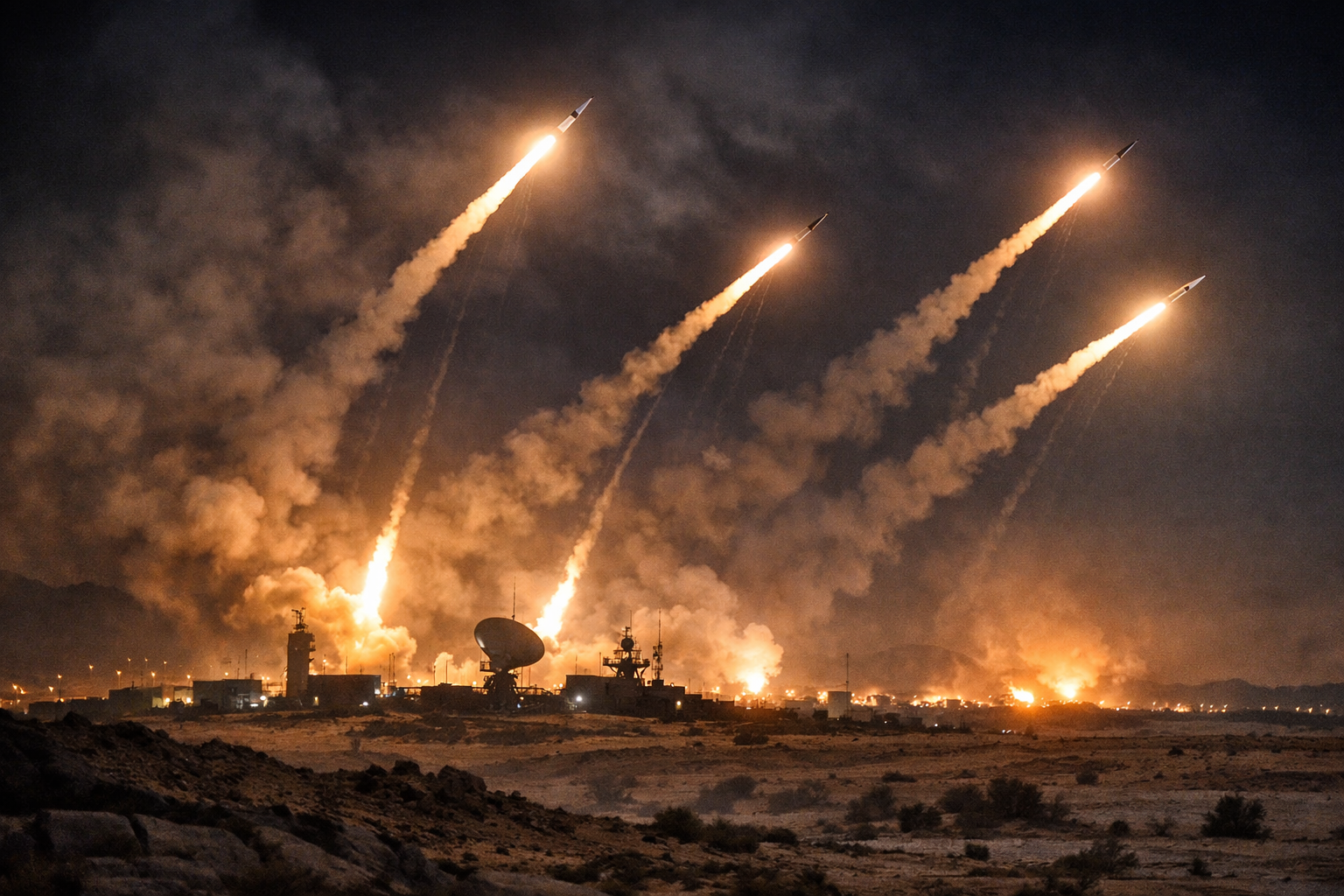
The conflict involving Iran, Israel, and the United States has entered a far more dangerous phase. What began as retaliatory strikes is now spreading across the Middle East, drawing in multiple countries and raising fears of a broader regional war.
The latest escalation comes after Iran attacks U.S. bases and military-linked locations across the Gulf region with drones and missiles. Several countries that host American military facilities have found themselves caught in the middle of the growing confrontation.
For Washington, this development raises the stakes significantly. When U.S. military infrastructure becomes a direct target, the conflict moves beyond political tension and into something much more volatile.
At the same time, Iran appears to be sending a clear message. Tehran wants to show that if it is attacked or pressured, it can respond across the region and threaten U.S. strategic positions far beyond Iran’s borders.
The question now is how far this escalation will go.
Iran Expands Retaliation Across the Middle East
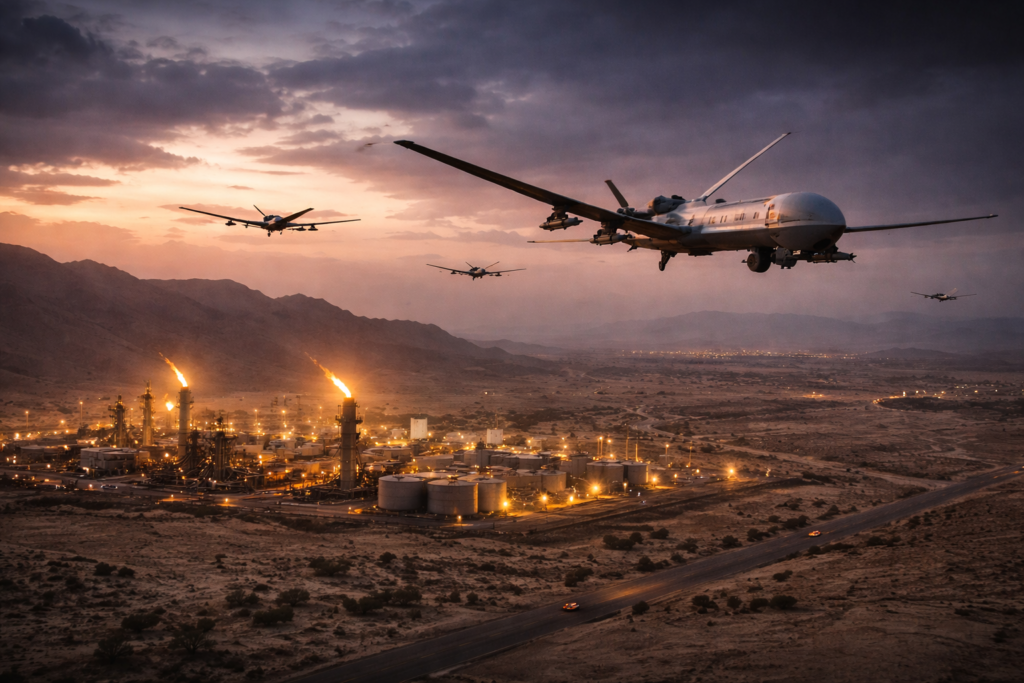
Iran’s recent actions suggest that the country is widening its response strategy. Instead of limiting retaliation to symbolic measures, Tehran is now targeting locations connected to U.S. influence across the Middle East.
Missiles and drones have reportedly been launched toward several Gulf states where American forces are stationed. These strikes appear designed to demonstrate that Iran can reach strategic targets across multiple countries if tensions continue to rise.
According to reporting from Reuters, Iranian retaliation has included waves of drone and missile activity directed toward locations connected to U.S. military infrastructure in the region. While many threats have been intercepted, the broader signal is clear.
Iran is showing that it has the capability to expand the conflict beyond a single battlefield.
This shift also supports growing warnings that the confrontation could evolve into a wider regional crisis involving multiple actors. Analysts have already raised concerns that the conflict may expand across several fronts if retaliation continues.
A deeper look at this possibility can be found in this analysis of the Iran multi-front war escalation and how the situation could spread across the region.
Right now, the pattern of attacks suggests those warnings may be becoming reality.
Which U.S. Bases and Allies Were Targeted?
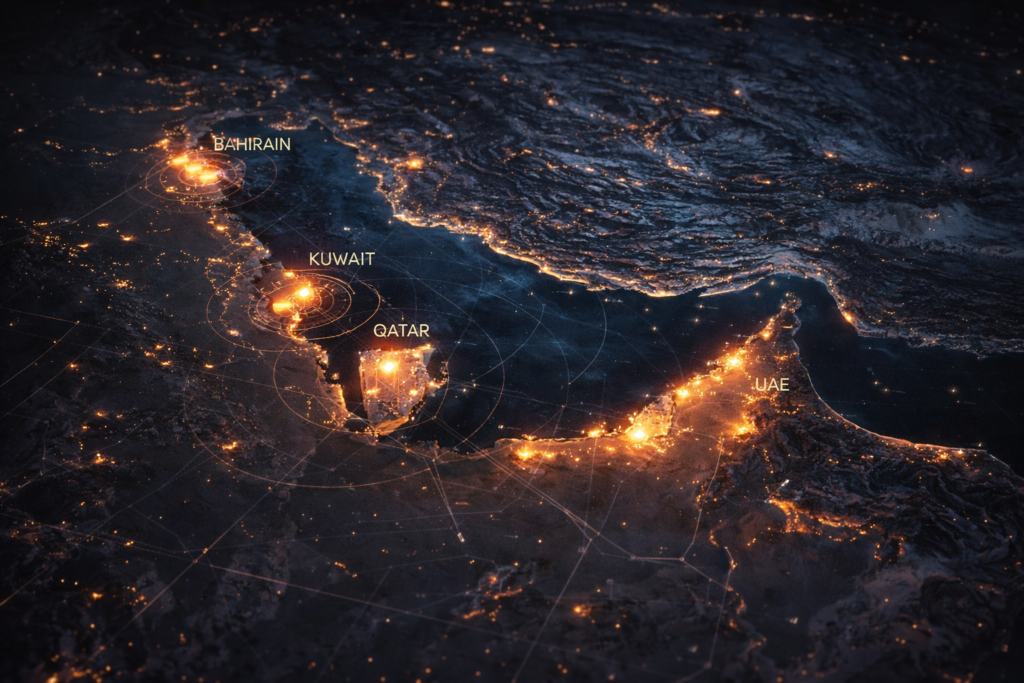
Several Gulf countries host American military bases that are critical to U.S. operations in the Middle East. These bases support air missions, intelligence gathering, naval coordination, and regional defense planning.
Among the countries most often mentioned in reports about recent threats or attacks are Bahrain, Qatar, Kuwait, Iraq, Saudi Arabia, and the United Arab Emirates.
Each of these locations plays an important strategic role.
Bahrain hosts the headquarters of the U.S. Fifth Fleet, which oversees naval operations across the Persian Gulf. Qatar is home to Al Udeid Air Base, one of the largest American military facilities in the region and a key hub for air operations.
Kuwait and Iraq serve as logistical centers for U.S. military deployments, while Saudi Arabia and the United Arab Emirates host additional defense installations that support regional security.
Because these countries host American forces, they also become potential targets during times of conflict.
Recent reporting from the Associated Press has highlighted incidents involving drones and missile threats near locations connected to U.S. military infrastructure. In several cases, defensive systems intercepted incoming threats before they caused major damage.
Even so, the fact that these bases are being targeted shows how quickly the situation is escalating.
Why Iran Is Targeting U.S. Forces
Understanding why Iran attacks U.S. bases requires looking at Tehran’s broader strategy.
Iran often relies on asymmetric tactics rather than direct conventional warfare against a stronger military power. Missile strikes, drone operations, and pressure on regional allies allow Tehran to demonstrate its capabilities without immediately triggering a full scale war.
By targeting U.S. bases across the Middle East, Iran sends a message that American involvement in the conflict carries consequences beyond the initial battlefield.
This approach also has a domestic political dimension. Iranian leaders frequently portray their actions as resistance against foreign military presence in the region.
At the same time, this strategy is risky.
If an attack were to cause significant casualties among American forces or destroy major military infrastructure, the United States could respond with stronger military action. That kind of response could quickly push the conflict toward a much larger confrontation.
For now, both sides appear to be navigating a narrow path between retaliation and outright war.
Hezbollah and Other Groups Could Escalate the Conflict
Another factor raising concern is the potential involvement of Iran aligned groups across the Middle East.
One of the most powerful of these groups is Hezbollah, the Lebanese organization that maintains close ties with Tehran. Hezbollah has a large arsenal of rockets and drones and has previously engaged in conflicts with Israel.
If Hezbollah becomes more directly involved in the current crisis, the conflict could expand dramatically.
A confrontation between Hezbollah and Israel could easily pull additional countries into the fighting and widen the battlefield.
For a deeper look at how this could affect U.S. interests, this analysis of Hezbollah’s role in the Iran war explains why the group’s involvement could reshape the conflict.
Beyond Hezbollah, several militia groups operating in Iraq and Syria have also been linked to Iran. These organizations have previously launched rocket and drone attacks targeting American forces stationed in those countries.
If these groups increase their operations, the conflict could quickly spread across multiple regions.
What Happens Next?
Predicting the next stage of the conflict is difficult, but several scenarios are possible.
One possibility is controlled escalation. Iran may continue limited strikes while the United States focuses on defensive responses and avoids launching large scale retaliatory attacks.
Another possibility is a cycle of escalation. If one attack causes significant casualties or damage, it could trigger stronger retaliation that leads to further military action.
Economic consequences are also a growing concern. The Middle East remains one of the most important regions for global energy supplies, and any disruption to shipping routes or oil infrastructure could affect global markets.
Diplomatic pressure may increase as international actors attempt to prevent the situation from spiraling into a wider war.
For now, the region is entering one of its most uncertain periods in recent years. With multiple actors involved and tensions continuing to rise, the fact that Iran attacks U.S. bases marks a serious escalation that could reshape the direction of the conflict.
Whether the situation stabilizes or expands further will depend on decisions made by leaders across the region in the coming weeks.
FAQs
What U.S. bases did Iran attack?
Iran launched missile and drone attacks targeting several locations connected to U.S. forces across the Gulf region. Reports mention facilities in Bahrain, Qatar, Kuwait, Saudi Arabia, and the United Arab Emirates as potential targets during the escalation.
Why is Iran attacking U.S. bases?
Iran’s attacks are widely seen as retaliation for military strikes carried out by the United States and Israel against Iranian targets. Tehran has warned that any country hosting U.S. military forces could become a “legitimate target” during the conflict.
Has the conflict spread beyond Iran and Israel?
Yes. The conflict has expanded across the Middle East, with drone and missile attacks reported in several Gulf states and threats against U.S. military installations and allied infrastructure in the region.
Which Gulf countries host U.S. military bases?
Several countries host American forces, including Bahrain, Qatar, Kuwait, Saudi Arabia, and the United Arab Emirates. These bases support air operations, naval deployments, and regional defense coordination.
Could the Iran war turn into a wider regional conflict?
Many analysts warn that the situation could evolve into a broader regional war if more actors become involved. Proxy groups and regional allies may expand the conflict beyond the current battlefield.