
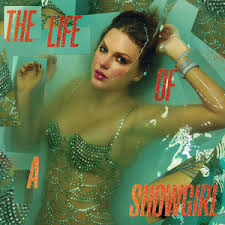
Taylor Swift The Life of a Showgirl isn’t just another album release — it’s a statement, a spectacle, and a strategy.
When Taylor Swift stepped onto the stage in early October 2025 to unveil her twelfth studio album, The Life of a Showgirl, the world didn’t just listen — it watched.
Because when Taylor moves, culture moves with her.
Three weeks later, she’s not just topping charts; she’s rewriting them. The album has smashed streaming records in the UK, dominated Spotify’s global charts, and forced critics to ask an uncomfortable question: Has Taylor become too safe… or too strategic?
This is not just another Taylor Swift era — it’s her boldest act of self-reinvention yet.
The Comeback of the Century
Taylor’s story has always been built like a movie — heartbreak, betrayal, reinvention, triumph. But The Life of a Showgirl feels different. It’s cinematic, glamorous, and unapologetically self-aware.
Released on October 3, 2025, the album arrived with the precision of a marketing masterclass. Swifties across London, Sydney, and LA flooded streaming platforms at midnight, pushing the album past 100 million streams within 24 hours — a new global record.
“Taylor Swift has turned album launches into cultural holidays,” noted Reuters after the album’s UK debut broke yet another chart milestone.
But beneath the confetti and costumes lies something deeper — a subtle message about fame, performance, and control.
From ‘Folklore’ to ‘Showgirl’ — The Shift Nobody Saw Coming
Back in the quiet, woodsy introspection of Folklore and Evermore, Taylor embraced minimalism — poetic lyrics, acoustic tones, isolation art.
Now, she’s done a 180.
The Life of a Showgirl is maximalist — neon, sequins, synths, and stage lights.
It’s a love letter to spectacle itself — and a self-aware commentary on the cost of putting your life on display.
The track “The Fate of Ophelia” captures that perfectly. Beneath its glitter-pop surface, it’s a raw metaphor about fame devouring identity — a modern-day reflection of Shakespeare’s doomed heroine.
Music journalist Emma Jenkins described it as:
“Taylor playing both the performer and the puppet master — the girl who knows the spotlight burns but still steps into it.”
And that’s where the genius lies.
The Business Behind the Brilliance
Let’s be real — Taylor isn’t just an artist. She’s a one-woman economy.
Every release now doubles as a global campaign: tour merchandise drops, brand collaborations, and surprise vinyl editions.
But The Life of a Showgirl shows a new business move — performance branding.
Instead of selling the illusion of authenticity, she’s selling the awareness of the illusion.
Every glittering image is intentionally theatrical. It’s not about escaping the mask — it’s about owning it.
Marketing analysts point out that this approach has tripled engagement rates on her social platforms while cementing her image as the most self-controlled celebrity brand in the industry.
Critics Call It “Safe” — But Safe Might Be the Strategy
Of course, not everyone is buying the glitter.
The Daily Bruin called the album “too polished” and urged Taylor to take more risks.
But that’s missing the point.
Taylor isn’t playing to shock — she’s playing to sustain. At 35, she’s already broken every metric that defines a pop star’s lifespan. She’s not reinventing for attention anymore; she’s reinventing to own longevity.
That’s why The Life of a Showgirl feels less like a rebellion and more like an empire expanding its borders.
The Cultural Aftershock
Every Taylor Swift era triggers ripple effects — fashion, fandom, and even feminism shift in her orbit.
This one? It’s about control — creative, emotional, financial.
She’s reminding artists — and audiences — that fame doesn’t have to devour you; it can be managed, monetized, and manipulated.
She’s teaching the industry that self-awareness is the new authenticity.
And let’s not ignore the UK connection — her album’s London debut outsold every domestic release that week, sparking British press comparisons to Madonna’s 1980s dominance.
The Final Bow — Taylor Swift, the Architect of Modern Pop
At this stage, calling Taylor Swift a “pop star” is like calling Steve Jobs a “tech guy.”
She’s an institution — part musician, part media mogul, part sociocultural phenomenon.
The Life of a Showgirl isn’t just an album. It’s a case study in brand evolution — how an artist stays relevant without losing authenticity.
For fans, it’s a glittering love letter.
For marketers, it’s a masterclass.
For critics, it’s a mirror — reflecting how pop culture keeps demanding reinvention while punishing those who succeed too easily.
FAQs
Q: What inspired Taylor Swift’s The Life of a Showgirl?
A: The album explores fame, performance, and identity — a reflection of Taylor’s own evolution as an artist navigating constant public attention.
Q: How did the album perform commercially?
A: It broke multiple records, including the highest UK first-week sales for a female artist in 2025.
Q: Why are some critics calling it “safe”?
A: Because the album favors cohesion and theatrical polish over experimental chaos — but that’s exactly its strength.
Q: How does this era change Taylor’s public image?
A: It marks her transition from cultural phenomenon to controlled architect of her legacy — more private, more calculated, more enduring.
Key Takeaways
- Taylor Swift is no longer chasing virality — she’s building legacy.
- The Life of a Showgirl is less about rebellion, more about mastery.
- The new power move in pop isn’t vulnerability — it’s strategic self-awareness.
Which is your favourite song of Taylor Swift just comment below or contact us via our page
1 thought on “Taylor Swift’s ‘The Life of a Showgirl’: How the Pop Queen Turned Her Own Story into a Cultural Revolution”