
Introduction
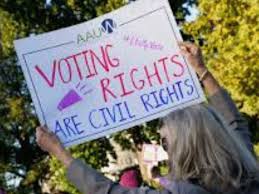
The Voting Right Act (VRA) of 1965 remain one of the most significant civil rights law in united State history. Crafted to enforce the 15th amendment, it aimed to put an end to racial discrimination in voting especially in southern states where practices like literacy tests, poll taxes, and other devices had long suppressed Black vote. over time, the VRA has been amended, challenged, ad in some parts weakened-but its legacy and importance continue to shape debates about voting equality and civil rights.
What is the Voting Rights Act?
- Enactment: Signed into law by president Lyndon B. Johnson on August 6, 1965.
- Purpose: To enforce the constitutional right to vote and to protect voters from racial discrimination.
Key Provisions of the VRA
- Section 2: prohibits any voting practice or procedure that discriminates on the basis of race, colour, or membership in a language minority group. this includes not just purposeful iscrimination but also practices that have discriminatory effect.
- Preclearance (Sections 4 & 5 originally): State or jurisdictions with a history pf discrimination were required to get federal approval (“preclearance”) before making changes to voting laws or procedures. These jurisdictions were identified under a formula in section 4.
- Language Minority provisions: added in amendments (especially 1975), these require certain jurisdictions to provide multilingual ballots and assistance so that language dose not become a barrier.
- Other Prohibition: Ban on literacy tests, “tests or devices” used to disenfranchise voters, and actions that have the effect of reducing voter registration or turnout among minorities.
- Congressional Reauthorizations and Amendments: The act has been renewed and expanded several times (1970, 1975, 1982, 2006), to adjust and broaden protections.
Major Historical Impacts
- Rapid increase in black voter registration in the south following passage.
- Greater racial representation in local, state, and federal offices. studied effects includ not just political offices but improvements in infrastructure and servuces in minority communities.
- Expansion of voting rights for non-english speakers, ensuring ballots and assistance in multiple languages.
Challenges, weakening & court decisions
While the VRA has Had a powerful effect, there have been several legal decisions and changes that have weakend some of its most protective provisions:
- Shelby County v. Holder (2013): the supreme court struck down the coverage formula in section 4 which effectively rendered section 5’s preclearance requirement inoperative (because there was no longer a way to determine which jurisdiction needed preclearance).
- More recent supreme court ruling have further limition how broadly certain provisions can be enforced or applied.
- Debate over what constitutes “discriminatory effect” vs “intent”, and how to evalute redistricting plans with respect to minority representation.
Current Relevance & Debates
- Ongoing litigation and policy debates about restoring or reforming the Act (e.g. reinstating preclearance, updateing coverage formulas) to account for newer froms of voter suppression.
- The tension between ensuring fair voting access and arguments about states’ right, election integrity, and administrative burden.
- Efforts by some states to pass state level voting rights law to fill the gaps left by weakened federal protections.
- Supreme Court cases under review are challenging section 2’s application in redistricting, especially whether race can be used as factor to ensure minority representation without violating equal protection without violating equal protection principles. (These cases have major implication for how voting districts are drawn).
Loopholes & Weaknesses (What Can Still Go Wrong)
You asked for loopholes and what might backfire – here are important caveats to the VRA:
- Preclearance formula removed: Without a valid, up-to-date formula, jurisdictions with historyes of discrimination are not under automatic scrutiny when changing voting law. States mah pass restrictive laws (e.g. voter ID, purging voter rolls limiting early voting) without preclearance.
- Proving discriminatory effect vs intent: Courts often require showing discriminatory intent in addition to effect, which is harder. Some jurisdictions may enact laws that are neutral in wording but have a disparate impact.
- judicial interpretation can narrow protection: Supreme court decision can limit the scope of sections, redefine burdens of proof, or limit who has standing to sue.
- Legislation gaps: Congress must act to update coverage formulas or expand enforcement; delays or political disagreement
- State – level variation: In absence of strong federal enforcement, protection may differ widely from state to state; this minority voters in some states may be more vulnerable.
What Need Reform / Strengthening
To make the VRA more robust in today’s context, the following could help:
Restore preclearance with a new formula reflecting morden condition rather than historical pattern alone.
Enhance Section 2 protection, simplifying proof burdens and expanding ability to challenge vote dilution.
Support state-level voting rights laws so that even if federal protection are weakened, states can safeguard votes.
Ensure language access and protections for non-English speaking citizens remain strong.
Transparency in election law changes; public notice, public comment period; court can review.
Conclusion
The Voting Right Act remains a fundamental pieces of U.S. civil rights law. Though many of its most poitools have been weakened over the decades, its core mission -to ensure every eligible citizen has equal access to vite-remains essentia. Fir the law to keep pace with evolving challenge (subtle voter suppression, new barriers, changing demographic), reforms are necessary. Without vigilance, what was once a robust shield cloud erode further, leaving many voices unheard.
FAQs
What is the Voting Rights Act of 1965?
The Voting Rights Act of 1965 is a landmark U.S. law that prohibits racial discrimination in voting. It was designed to enforce the 15th Amendment and ensure equal access to the ballot box for all citizens.
Why was the Voting Rights Act passed?
It was passed to address racial discrimination in voting, particularly in Southern states, where barriers like literacy tests and poll taxes prevented African Americans from voting.
What does Section 2 of the Voting Rights Act mean?
Section 2 bans any voting practice or law that results in racial or language-based discrimination. It applies nationwide and allows individuals or groups to challenge unfair voting laws in court.
What happened to the preclearance rule under the Voting Rights Act?
The Supreme Court’s 2013 Shelby County v. Holder decision struck down the formula that determined which states needed federal approval before changing their voting laws, effectively ending automatic preclearance.
How has the Voting Rights Act changed over time?
The Act has been amended several times (in 1970, 1975, 1982, and 2006) to expand protections for minority and language-based groups, though some protections have weakened due to court rulings.
What are some challenges facing the Voting Rights Act today?
Modern challenges include restrictive voter ID laws, gerrymandering, voter roll purges, and reduced federal oversight—all of which can disproportionately affect minority communities.
Why is the Voting Rights Act still important today?
It remains a cornerstone of American democracy, ensuring that every eligible voter can participate equally in elections without discrimination or suppression.
How can the Voting Rights Act be strengthened?
Experts suggest restoring preclearance, simplifying proof of discrimination, and passing updated voting rights legislation to address modern suppression tactics.
If you want to share your thoughts then you can share it via Contact us page or just comment below