
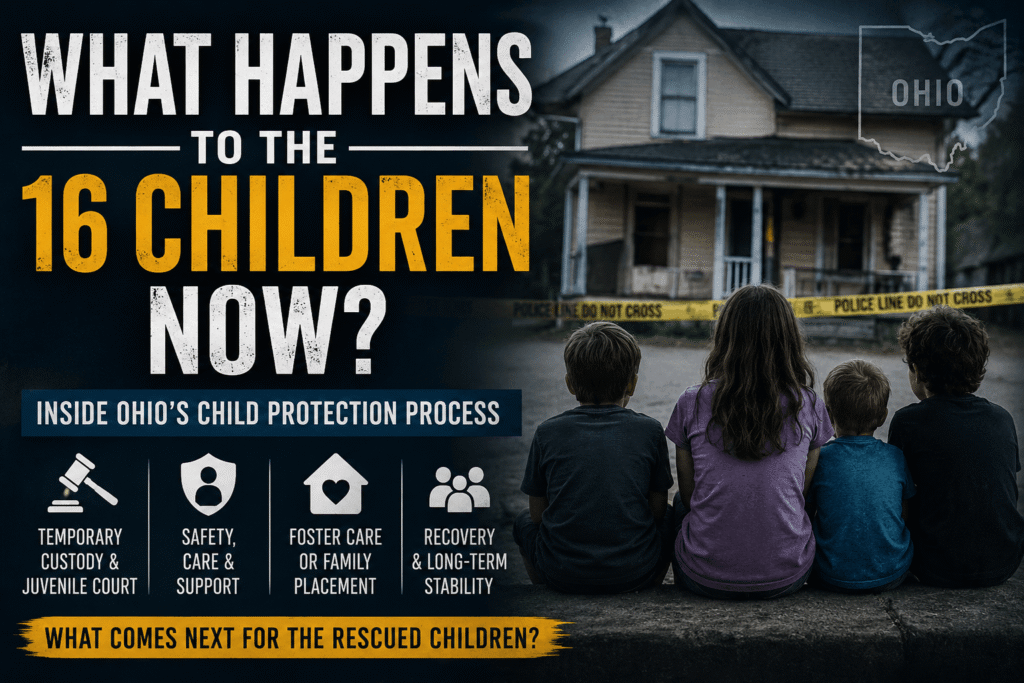
When authorities rescued 16 children from a home in Hamden, Ohio, public attention quickly focused on the criminal investigation. But after the arrests, another question began trending across Google, Reddit, Facebook, and X:
What happens to the 16 children now?
According to investigators, the children are currently in the temporary custody of Ohio child welfare officials while juvenile court proceedings continue. Their identities and locations have not been released because child protection cases involving minors are confidential. Child welfare experts say children rescued from severe neglect often require medical care, trauma-informed mental health treatment, educational assessments, and long-term support before permanent placement decisions can be made. The Associated Press’s latest coverage of the Ohio investigation and ABC News’ report on the challenges facing the rescued children explain why the recovery process is expected to take time.
If you’re just catching up on the investigation, read our Elizabeth Siders Ohio child abuse case explained for a complete overview of the arrests, criminal charges, and the latest developments.
You can also read our in-depth analysis, How Did 16 Children Go Undetected?, which explores how investigators believe the family remained largely outside public systems for years.
This article focuses on what comes next by explaining Ohio’s child protection process, what happens after children are removed from a home, and what recovery may look like as the legal process moves forward.
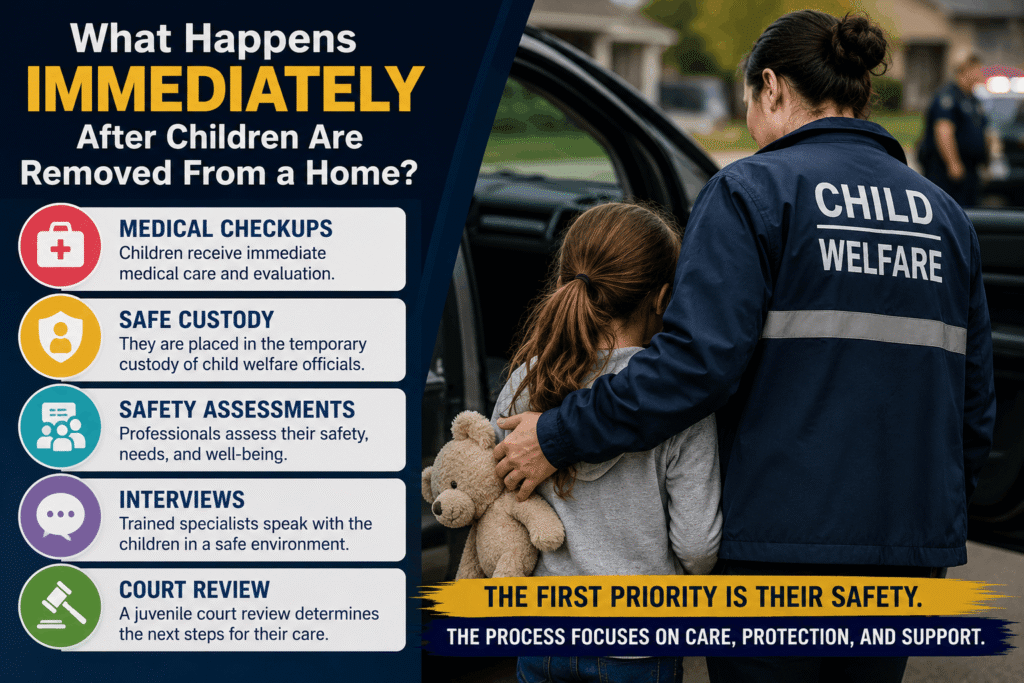
What Happens Immediately After Children Are Removed From a Home?
When authorities believe children are in immediate danger, their safety becomes the highest priority.
In the Vinton County child abuse case, emergency responders evaluated all 16 children after they were removed from the home. Several children required hospitalization because of their condition, while all of the children were placed into temporary custody through Ohio’s juvenile court system as investigators continued gathering evidence. The Associated Press’s latest report on the Ohio investigation outlines the emergency response following the discovery.
Although every child welfare investigation is different, Ohio’s protection process generally begins with several immediate steps:
- Emergency medical examinations
- Temporary custody approved through juvenile court
- Safety assessments by child welfare professionals
- Interviews conducted by trained specialists
- Planning for each child’s immediate care
These first few days are critical because they help officials understand each child’s physical health, emotional wellbeing, and immediate support needs before longer-term decisions are made.
Who Decides Where the Children Will Live?
One of the biggest questions Americans are asking is whether the children will enter foster care or eventually return to family members.
The answer depends on juvenile court decisions, child welfare assessments, and the ongoing investigation.
Why Are the 16 Children in Temporary State Custody?
Following a major child protection case, children usually remain in temporary custody approved through Ohio’s juvenile court system while judges determine what arrangement is in their best interests.
According to the latest reporting, the rescued children remain under the care of Ohio child welfare officials while legal proceedings continue. Officials have not released where each child has been placed because those records are confidential and protected under child welfare laws. The Associated Press report on the children’s recovery explains why protecting the children’s privacy remains a top priority.
Will the 16 Children Enter Foster Care?
Although this case involves one family, each child receives an individual assessment before long-term placement decisions are made.
Child welfare professionals evaluate factors such as:
- Age
- Medical condition
- Emotional wellbeing
- Developmental needs
- Sibling relationships
- Whether safe relatives are available to provide care
Because the children range from toddlers to young adults, their needs are expected to vary significantly.
Whenever it is safe and practical, child welfare agencies generally try to keep siblings together, because maintaining family relationships can help reduce additional trauma during recovery. However, placement decisions are always based on each child’s individual needs and safety rather than applying the same solution to every child.
How Does Ohio’s Child Protection Process Continue After Emergency Custody?
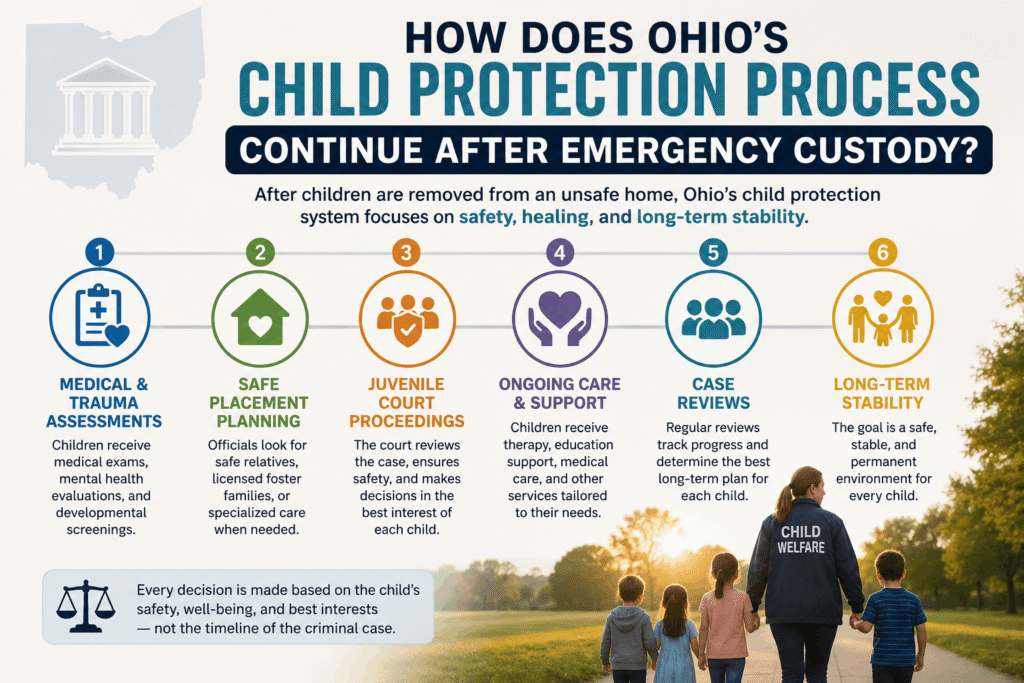
After children are placed in temporary custody, Ohio’s child protection system shifts its focus from emergency response to long-term safety, recovery, and stability. At the same time, the criminal investigation continues on a separate legal track.
According to the latest reporting, the rescued children remain under the care of Ohio child welfare officials while juvenile court proceedings move forward. The Associated Press’s latest report on the children’s recovery explains that protecting the children’s wellbeing is now the state’s top priority.
Medical and Trauma Assessments
Each child receives a comprehensive evaluation after entering protective custody.
These assessments typically include:
- Physical health examinations
- Mental health and trauma evaluations
- Developmental screenings
- Educational assessments
- Individual care planning
Child welfare experts say children recovering from severe neglect often need coordinated care involving physicians, trauma therapists, educators, and child welfare specialists. Recovery is a gradual process, with services tailored to each child’s physical, emotional, and developmental needs.
Depending on a child’s age and condition, support may also include speech therapy, occupational therapy, educational assistance, and ongoing counseling. The goal is to help each child regain stability while preparing for long-term placement decisions.
Finding the Best Long-Term Placement
Finding a safe and stable home is one of the most important responsibilities of Ohio’s child welfare system.
Whenever possible, officials try to:
- Keep siblings together
- Place children with safe relatives when appropriate
- Use licensed foster families
- Arrange specialized care for children with complex medical or emotional needs
Because this case involves children ranging from toddlers to young adults, experts expect placement decisions to be made individually rather than as one group. Every decision is based on the child’s best interests and overall safety.
Can the Children Ever Return Home?
This is one of the most common questions people are asking after following the Vinton County child abuse case.
The answer is it depends on future court decisions.
Returning children to a parent is not automatic after removal. Juvenile courts must determine whether a home can become safe again and whether reunification would truly serve each child’s best interests.
Criminal and Juvenile Cases Are Separate
The criminal proceedings and juvenile court proceedings follow separate legal paths.
While prosecutors pursue criminal charges against the four defendants, juvenile court focuses only on the children’s safety, care, and long-term placement. Those decisions are based on evidence, professional evaluations, and recommendations from child welfare specialists rather than the outcome of the criminal trial.
Because the investigation remains active, officials have not indicated what permanent custody decisions may eventually be made.
Why Recovery Will Be a Long-Term Process
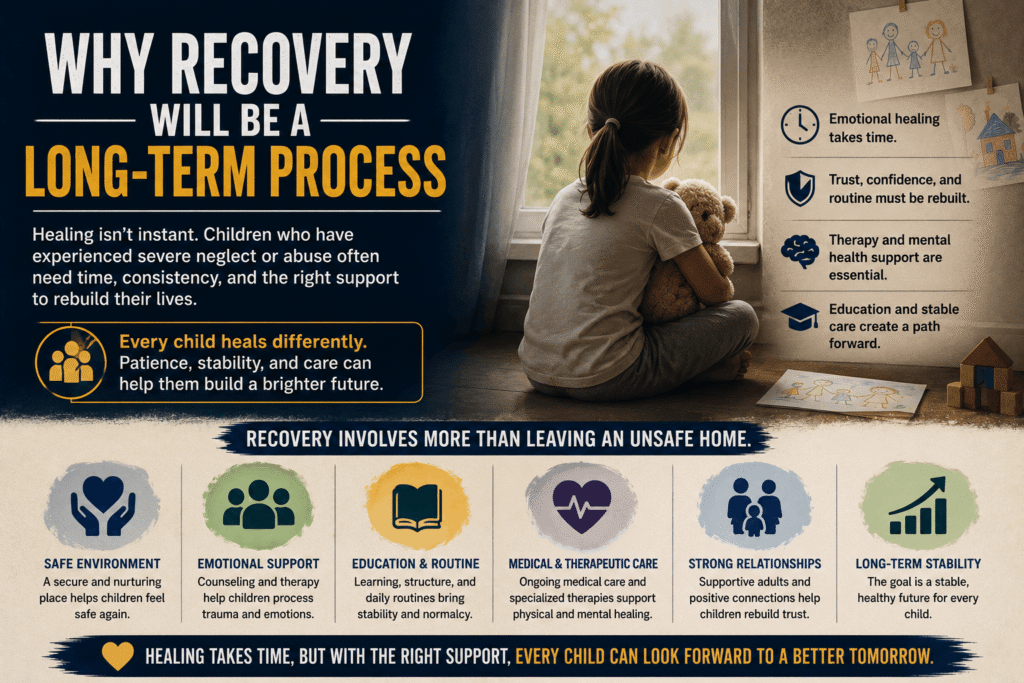
Although the rescued children are now in a safer environment, experts say recovery involves much more than leaving an unsafe home.
Children recovering from prolonged neglect often need help rebuilding trust, adjusting to structured routines, continuing their education, and processing traumatic experiences. Every child’s recovery is different, and some may require specialized medical or behavioral support.
The ABC News report on the challenges facing the rescued children notes that children in situations like this often benefit from coordinated care involving healthcare providers, educators, counselors, and child welfare professionals.
The case has also renewed attention on broader challenges facing child welfare systems across the United States, including the need for more foster families, expanded mental health services, and additional resources for children recovering from severe trauma.
What Happens Next in the Vinton County Child Abuse Case?
While the children begin receiving care, the legal process will continue over the coming months.
Investigators are still reviewing evidence, interviewing witnesses, and examining records to better understand the family’s history. Future court hearings are expected to provide additional information about both the criminal case and the juvenile proceedings. The Associated Press’s continuing coverage of the Ohio investigation provides verified updates as new information becomes available.
For now, officials say their primary goal is ensuring the children remain safe, medically stable, and supported while professionals determine the most appropriate long-term plan for each child.
The Bottom Line
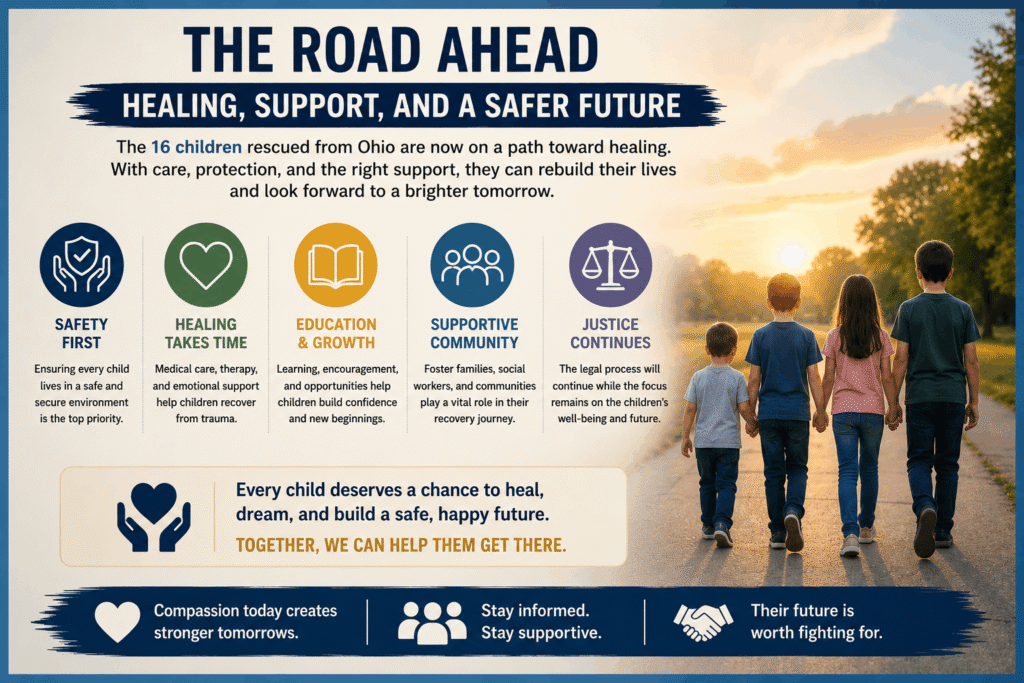
The question “What happens to the 16 children now?” does not have one simple answer because every child will follow a different path based on individual needs, professional evaluations, and future court decisions.
For now, the rescued children remain in the temporary custody of Ohio child welfare officials while receiving medical care, trauma assessments, educational evaluations, and other support services. At the same time, Ohio’s juvenile courts are working separately from the criminal case to determine the safest long-term plan for each child.
If you’re following this developing story, you can also read our Elizabeth Siders Ohio child abuse case explained for a complete overview of the arrests and criminal charges, along with our analysis of How Did 16 Children Go Undetected?, which explores the unanswered questions surrounding the investigation.
As more information becomes available through court proceedings and official updates, the public will gain a clearer understanding of what lies ahead for these children. Until then, protecting their privacy while supporting their recovery remains the highest priority.
FAQs
What happens to the 16 children now?
The children remain in the temporary custody of Ohio child welfare officials while juvenile court proceedings continue. They are receiving medical evaluations, trauma assessments, and other support services.
Will the children enter foster care?
Possibly. Child welfare officials first assess whether safe relatives are available. If not, children may be placed with licensed foster families or other appropriate caregivers based on their individual needs.
Can the children return home?
That decision has not been made. Juvenile courts will determine whether reunification is safe and in each child’s best interests after reviewing evidence and professional recommendations.